


This article was originally published in Le Point on 19.01.2026
Hair is one of those features of human appearance that, as Joni Mitchell so aptly put it, “you don’t know what you got til it’s gone.” Trust me, I speak from experience.
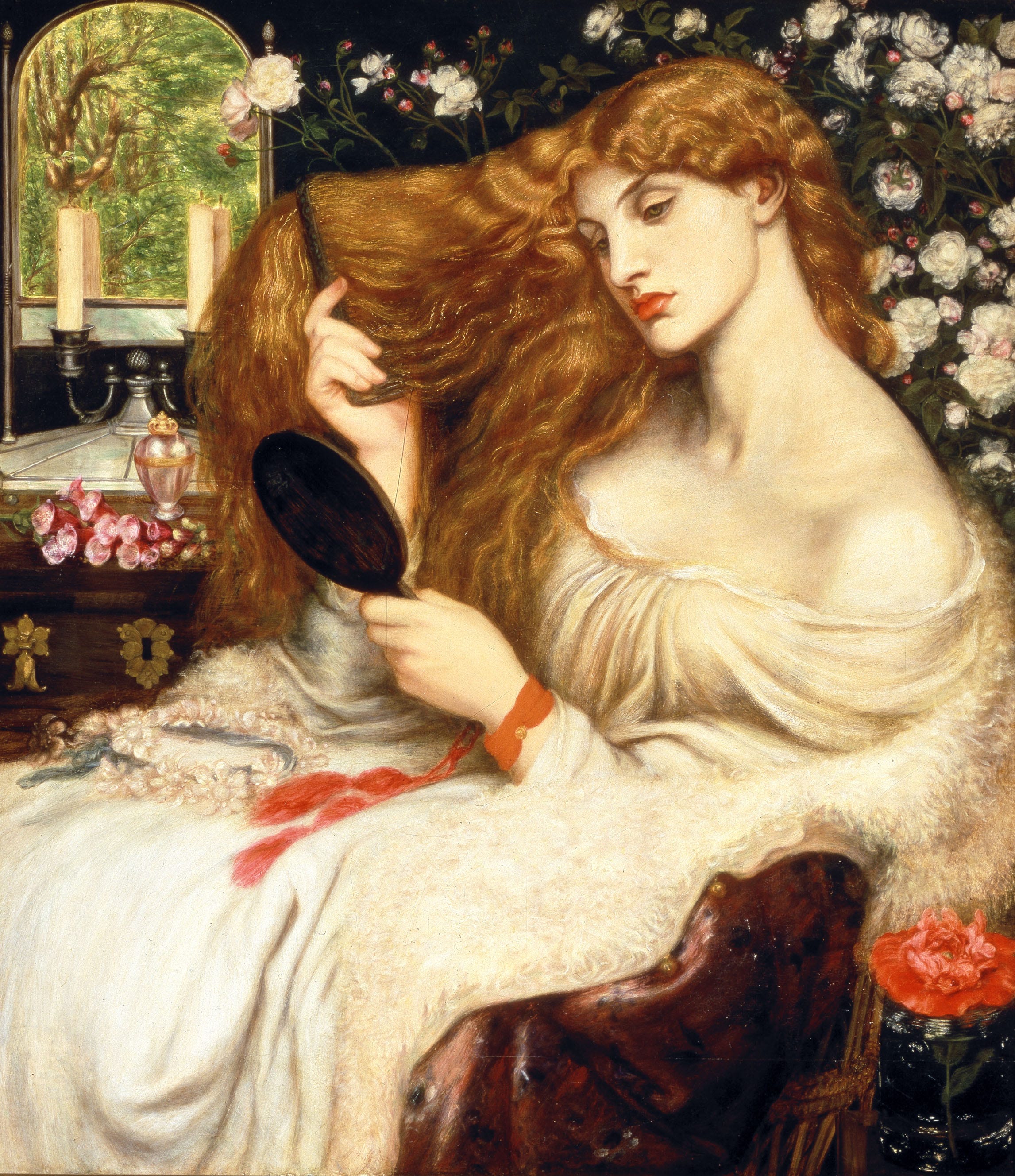
But while follicularly challenged, middle-aged men are, for better or worse, about as rare and attention-grabbing as pebbles on a dirt road, women sadly aren’t granted that same luxury of popular indifference. (The giveaway in male pattern baldness is male. We can save that evolutionary mystery for another column.) By contrast, whatever is—or isn’t—growing out of women’s heads tends to be the focus of significant attention and, as a result, an often-substantial investment of time and money. This isn’t to say that there aren’t plenty of men tearing their hair out over their hair loss or preoccupied with their hearty manes. But it’s really the females of our species who epitomize the relationship between sex, beauty, and hair. Especially long hair, which is almost inseparable from femininity.
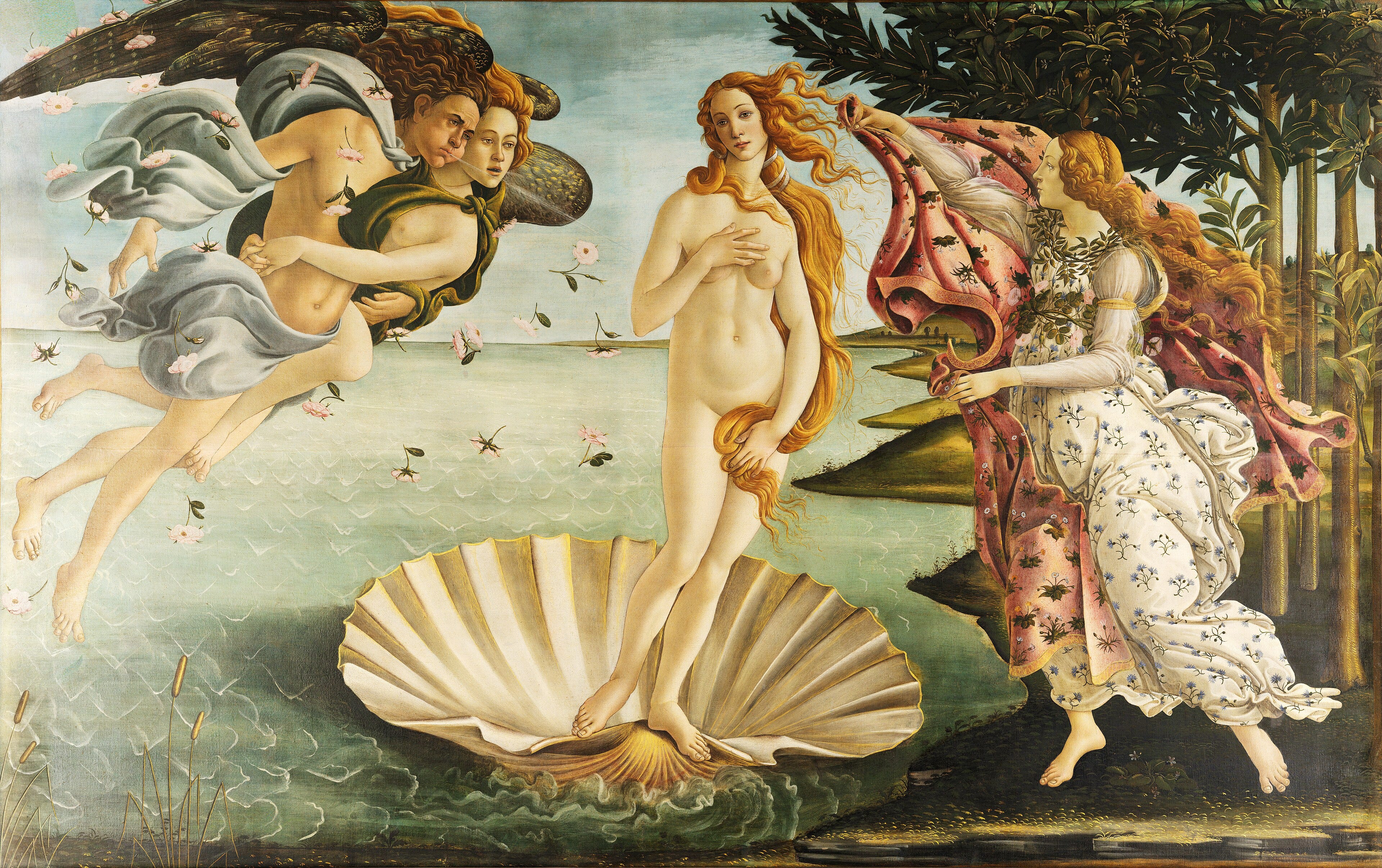
Consider that archetypical vision—it might help to play the scene in your head in slow motion, set to an 80s soundtrack—of the uptight librarian-type figure reaching up to untie her long tresses, liberating her womanhood in a seductive display. Or, if you’ve never pondered what many scholars believe to be the X-rated symbolism hidden in Rapunzel’s hair, your innocence is enviable. There’s Botticelli’s Birth of Venus painting with those flowing, golden strands covering her private bits. Also, Sharia law and hijabs, Orthodox Jewish women in head scarves, Mennonites in prayer bonnets. Not to mention that infamous brouhaha between Chris Rock and Will Smith over Jada Pinkett Smith’s G. I. Jane look (that she suffers from alopecia made the joke decidedly less funny, but Rock wasn’t aware of this at the time.).
Women’s hair is weirdly eroticized—and it probably always has been. In some conservative cultures, it’s almost like they’re walking around with breasts or vaginas on their heads.
In fact, Darwin himself mused about the puzzling role of women’s hair in The Descent of Man. After all, it’s not like having long, glistening ropes of keratin – spun red, gold, black, brown, or (these days) blue, green, or anything in between – sprouting out of your scalp confers any survival value. If anything, it kind of gets in the way. “The standards of beauty vary in different nations,” he wrote. “Nevertheless, long hair in women is almost universally admired.” Darwin postulated that our love of plentiful locks must be a product of sexual selection. Like the proverbial peacock’s tail, women’s long hair is pure ornamentation, broadcasting reproductive value and thereby attracting attention from prospective mates.
Over a century later, the Israeli biologist Amatz Zahavi extended this line of reasoning, arguing that female hair is a “costly signal.” Fabulous hair doesn’t happen by accident. It’s a walking résumé of free time, energy, and resources: proof that its owner can afford to fuss, groom, and maintain. In doing so, women aren’t just styling strands—they’re signaling their mate value and a comfortable spot in the social pecking order.
Despite some theoretical dabbling, however, modern investigators have paid astonishingly little attention to the role of hair in evolutionary models of attractiveness. Rather, most research in this area is about facial symmetry, waste-to-hip ratios, skin texture, and so on, usually with hair being literally cropped out of the analysis. In fact, hair may be so essential to our beauty judgments—again, especially female beauty—that its adaptive significance has been hiding in plain sight. Often, what is seen as too obvious to study (i.e., “men are attracted to women with pretty hair? duh!”) is unfortunately also left wholly untested, and that seems to be the case here. The real question, as with all evolutionary hypotheses, is why? Why do we react this predictable way to this recurring feature? It is rendering the familiar strange, so that we can see it more clearly from the perspective of an alien species studying our own.
Enter South Korean psychologist Jeong Cheon, who, along with her colleagues, set out to rectify this omission a few years ago by finally testing the actual links between women’s head hair and sex. “The possible psychological function of hair has never been investigated in committed, romantic relationships,” they write. So, in their 2024 study published in the journal Frontiers in Psychology, the authors surveyed 204 married South Korean couples about their sex lives, asking some quite pointed questions of husbands and wives separately.
How physically attractive do you find your parter? How strong is your sex drive toward them? On average, how many times per month do you have sexual intercourse with them? Alongside those probing items, the researchers also collected data on each person’s hair length and hair quality.
There are three reasons, hypothesized Cheon and her colleagues, that the quality and length of wives’ hair—but not that of husbands—should predict the frequency of sex in a marriage:
· It turns men on. Previous studies have shown that men indeed prefer women with lengthy, high-quality hair, and it’s not rocket science to assume that this preference translates into heightened sexual desire. “Traits that elicit greater positive evaluations in men,” write the authors, “are likely to stimulate men’s sexual desire and imply reproductive potential in women. Greater sexual desire in men, in turn, should be associated with a greater amount of sexual intercourse among romantic dyads.”
· Good genes. Consistent with Darwin’s view of women’s head hair being a product of sexual selection (think, peacock’s tail), luxurious locks are a blinking marquee for a top-shelf female, signaling health and youthfulness. Moreover, as Zahavi’s “handicapping” model of women’s hair being a costly signal contends (all that time and money spent on something not only inconsequential to their survival, but possibly even impeding their behaviors and absorbing precious resources), these women are demonstrating that they can afford to indulge in an otherwise frivolous aesthetic display. Because those plentiful resources would also be routed toward any potential offspring, this enhances a woman’s mate value in the eyes of a suitor. Sure, these days every corner drugstore has a whole aisle bursting with haircare potions, and you don’t need to be the queen of Egypt to flaunt goddess-level hair—but back in our ancestral past, long before serums, shampoos, and salon-speak, that kind of luxury was a far rarer flex. “In this regard,” state the authors, “women’s hair communicates phenotypic and genetic quality that motivates men to reach a reproductive goal . . . and should ultimately lead to romantic dyads engaging in more frequent sexual intercourse.”
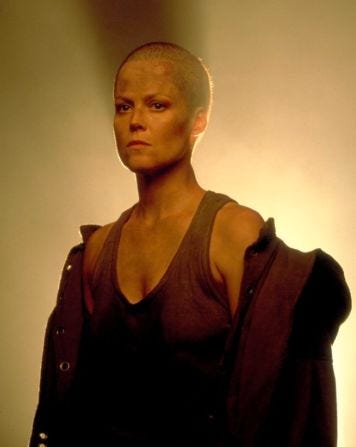
· The girlier, the better. “My thinking was that a girl just is not a girl without her hair,” wrote Hemingway. Again, see that G.I. Jane reference above, or maybe Sigourney Weaver’s fierce, shaved-head persona of Ellen Ripley in Alien 3. It’s a blatant stereotype, sure, but across cultures, long hair is not only canonical with femininity but is the antithesis of masculinity. And because (most) human beings are attracted to clearly opposite-sex others who subscribe to gender norms, this emblematic display of femaleness elicits greater sexual arousal. “Long and healthy hair has likely become an integral aspect of sexual scripts,” Cheon and her coauthors explain, “serving as a symbol of fertility and attractiveness.” Wherever such features are “culturally anticipated,” they add, “men are more inclined to positively evaluate women who possess such attributes and subsequently experience heightened sexual desire toward them.” And that, once again, should equate to more boinking within a marriage.
It’s probably safe to say that most women aren’t exactly lusting over men with combovers and receding hairlines, either. Who doesn’t love a good head of hair? Still, say the authors, for evolutionary reasons, women place less of a premium on men’s hair length and quality. After all, the messages that these attributes convey, such as male youthfulness, aren’t as important in women’s adaptive mating decisions. Moreover, they write, “long hair in men may have been perceived as burdensome in hunter-gatherer societies.” Sure, he might be pretty. But having a vain Fabio in one’s war party, blinded during the height of battle by the blood-soaked strands covering his eyes, or getting his sumptuous locks tangled up in a spear while an angry wooly mammoth barrels toward the group, wouldn’t be just annoying, but maybe even deadly.
Anyway, back to the study. What did Cheon and her colleagues find? Pretty much just what they expected. Even after controlling for all the obvious possible confounds—couples’ ages, length of marriage, infidelity, number of children, relationship satisfaction—wives’ hair quality and length directly influenced their husbands’ ratings of their attractiveness, subsequently arousing greater sexual desire toward them. “Greater sexual desire in men was [in turn] associated with a higher likelihood for marital dyads to have more frequent sexual intercourse,” clarify the authors, in case you’ve lost the plot. The effects weren’t huge. In fact, they were very small, and hair is far from the most important thing in a happy marriage. Still, the findings clearly showed that wives’ hair—but not that of husbands—play a subtle role in keeping that spark alive, operating “more on an implicit level to trigger [male] sexual response systems rather than directly shaping conscious sexual decision-making.”
Also, it was the wives’ hair quality that was a stronger predictor of sexual frequency than their hair length. “Notably, hair quality,” they point out, “being less controllable than hair length, is potentially a more innate indicator of a woman’s mate value or genetic quality . . . Unlike hair length—which can be easily altered through cutting, trimming, or growing—hair quality can indicate more fundamental aspects like good health or the absence of illness.”
Maybe. But with wigs, weaves, toupees, and hair transplants, we’re no longer the animals we’re epigenetically meant to be, of course. What used to be “hard-to-fake” signals of youth and fertility are now quite easily faked… for a fee. That caveat emptor aside, the authors contend that their findings have real-world, even therapeutic applications for long-suffering couples, with good hair—at least in wives—strengthening pair bonds by boosting husbands’ libidos. In their more judicious wording, such investigations “open a promising avenue where interventions for having more positive sexual lives can be promoted.” Another evolutionary psychology lifehack? Some problems need a heart-to-heart; others just need a good stylist.
This newsletter is free. But it’s a lot of work! Like what you read? Toss a tip in the jar—any amount that makes sense for you—so I can keep overthinking things on your behalf.
Costly signalling is the simplistic answer and is plausible if we were observing males. However it is very rare among female mammals and birds.(1) There may be a clue in mating patterns in societies where women more commonly leave their family group. Here, women would seek to selectively present their fitness to potential suitors to allow them to choose the highest status husbands. Hair is a variable signal - you can tie it up or cover it, or you can “let your hair down” when you see a hot fellow walking by.
(1)The only other costly signal I can think of right now is female breasts, but the best theory of their evolutionary origin is as a false signal of childbirth survival. Human heads got so big that they started killing mothers in childbirth, so there was pressure to signal you could survive it even if you haven’t ever been pregnant. Have you studied the evolutionary origin of human breasts? Might be another good topic.