


This article was originally published in Le Point on 21.12.2025
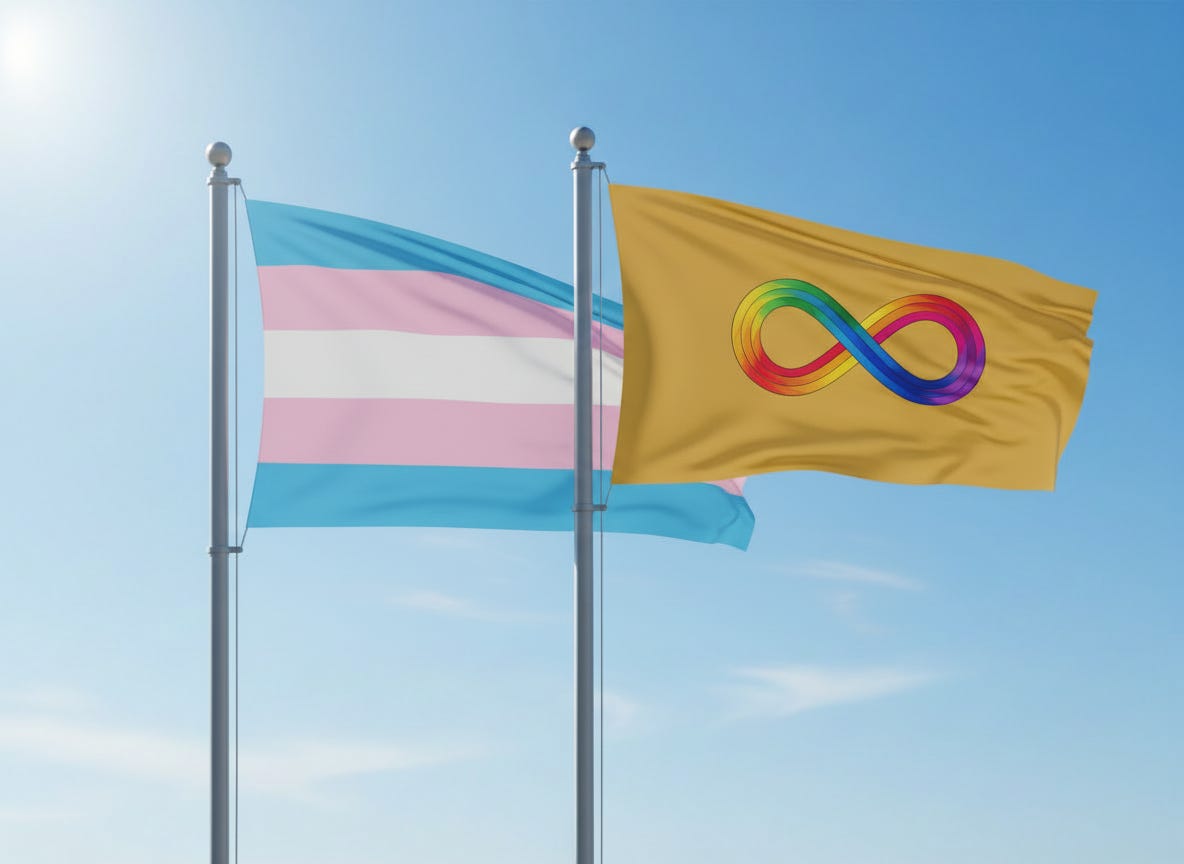
Gender identity and autism. Both topics, to put it mildly, enflame passionate debate these days. However, one doesn’t have to take a heated “position” to appreciate the intriguing fact that people on the autism spectrum are curiously overrepresented in the trans community. This also extends to any nonbinary identities that encompass, as one group of investigators put it, “one’s innermost feelings of maleness, femaleness, a blend of both, or neither.”
Depending on how autism is being measured—having an official diagnosis, self-diagnosis, the use of surveys to gauge autistic-like traits, and so on—estimates vary. One recent review suggested that up to 26% of trans people may be on the autism spectrum, compared to just 1.85% of those in the general “cis” population. (Needless to say, most autistic people are not trans, and most trans people are not autistic.) Yet why it is so many orders of magnitude higher is something of a scientific mystery.
In what follows, I draw from a summary and analysis published last year in Review Journal of Autism and Developmental Disorders by Dutch psychologist Luna Wattel and her colleagues, who surveyed the main theory contenders for the trans-autism link. Below are the “Top 15” explanations for this puzzling connection, carving the list up into three general categories: biological, psychological, and social explanations.
Biological Theories
With these theories, autism and trans are seen as being rooted in some common aspect of the individual’s biological makeup. In other words, being autistic doesn’t cause one to be trans, or vice versa, but both share biological markers that, somehow, explain their co-occurrence.
1. High birthweight. The mechanisms are anyone’s guess, but some theorists have pointed to limited evidence suggesting that trans individuals and those on the autism spectrum may be larger than normal at birth. Wattel et al. don’t buy this one, however, pointing out the connection between autism and birthweight is weak, at best.
2. Extreme male brain. That’s not satire, it’s a technical term introduced by British developmental psychopathologist Simon Baron-Cohen (yes, cousin of Sacha) over two decades ago, to describe the textbook autistic personality. The “male brain,” according to this view, is one that is better at systemizing than empathizing, a basic sex-patterned difference that is often pronounced (i.e., “extreme”) in those with autism. Think, Spock. Girls with autism have more male cognitive traits than non-autistic females, leading them to experience themselves as masculine. Although there is evidence that trans men (assigned female at birth) score higher on systematizing than cis women, the trouble with this theory, as Wattel and her coauthors note, is that it doesn’t account for the autism-trans link for trans women (assigned male at birth).
3. Prenatal hormones. According to this view, higher circulating levels of androgen in the womb (hormones that promote male traits) masculinize fetal brain development and lead to a greater likelihood of autism. Autism is indeed about four times more common in boys than girls, but direct links with prenatal androgen exposure and autism isn’t well-established. Also, this “theory” may just be another way of describing how the extreme male brain effect plays out for trans men, and again, it can’t account for the fact that so many trans females are also on the autism spectrum.
4. Genetic factors. The assumption here is that there is some common, yet-to-be identified underlying genetic—or at least epigenetic—predisposition for autism and transgender identity. Although we know that autistic traits are strongly (though not straightforwardly) heritable, there are no comparable data for the genetic basis of transgender traits. To say either is “caused by genes” does violence, in my view, to the complexity of these issues. An interesting anecdotal aside, however, is a recent comment made by Elon Musk—who is himself known to be on the autism spectrum—about his estranged trans daughter being “born gay and slightly autistic.”
Psychological Theories
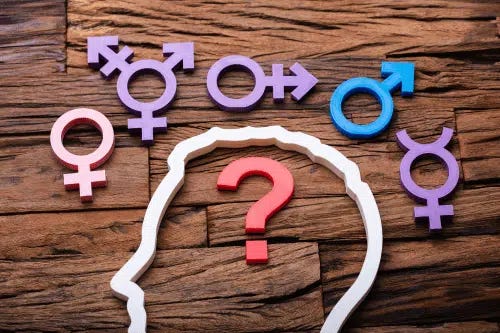
The theories falling under this umbrella imply that the psychological traits associated with autism make people more likely to experience gender dysphoria, the unsettling sense that one’s biological sex does not align with one’s gender identity. The basic idea here is that trans autistic people are not “born in the wrong body,” so to speak, insomuch as their autism has led them to process and interpret experiences in ways that cause them to identify as trans.
5. Gender development. Some theorists point to evidence suggesting a developmental lag in autistic children’s grasp of gender constancy—the understanding that gender is fixed and doesn’t change despite superficial changes. Whereas the fact that a boy is a boy even if he’s wearing a dress is part of most children’s thinking by the age of 6 or 7, those with autism may not reason in the same fixed terms of a male or female “essence.” If the autistic child is also gender-atypical in their playstyle, clothes preferences, mannerisms, and so on, this may, in turn, lead some to self-categorize in terms of their outward behaviors or dress, rather than their unchanging biological sex.
6. Obsessions. Restricted interests are very common in autism, with many on the spectrum becoming preoccupied with circumscribed topics or hobbies. Whether it’s surgically disassembling wristwatches, fastidiously tracking cargo flights to and from the local airport, acquiring encyclopedic knowledge of the entire passenger list on the RMS Titanic, or, in this hypothetical case, harboring “superficial obsessional gender interests,” the idea is that the autistic tendency for intense interests makes some on the spectrum more likely to become myopically fixated on their gender identity. As with the other explanations, the verdict is still out on this one, and Wattel and her colleagues aren’t particularly convinced by the scarce and conflicting data.
7. Rigidity. Another psychological characteristic of those with autism is a sort of cognitive inflexibility, a rigid pattern of strict rule-based thinking that can make it difficult for individuals to accommodate nuance, categorical uncertainties, or changes in routine. “The rigidity theory entails that cognitive inflexibility due to [autism],” explain Wattel et al., “causes more rigid and concrete thinking about gender (i.e., more black-and-white views on what it means to be male/female.” This presumably makes autistic people more prone to identifying as trans, as they’re basically just following some rigid, logic-based inference: if I feel this way, then I must be a woman/man. Not a lot of evidence for this one, and even some evidence against it.
8. Sensory processing. Many people with autism experience a heightened sensitivity to sensory stimuli, being either easily overwhelmed (overstimulated) or requiring extra sensory input (under-stimulated). Along with obsessions and rigidity, these unique sensory-processing demands are seen as part of a constellation of traits orienting autistic people toward certain interests and behaviors. It sounds a bit of a stretch to me, but one claim is that engendered sensory input (such as the tactile feel of soft clothing, the sight of glittery objects, stepping into heels, and so on) steer some autistic people—especially males who identify as women—toward a trans identity. Earlier this year, one pair of theorists even described how the sudden deepening and unpredictable changes (i.e., cracking) of voice experienced by all teenage males at puberty is so acoustically distressing to some autistic boys (a rare phenomenon known as “puberphonia”) that they begin speaking in a falsetto to alleviate this unpleasant biological change. This, they say, in turn exacerbates preexisting feelings of gender incongruity. Autistic men do have higher voices on average than non-autistic men.
9. Sexual orientation. This one seems to overlap with the gender development and rigidity explanations above, but it boils down to this: autistic people may more readily confuse being gay with being trans. That is, they assume that if they’re attracted to the same sex, then they must be the opposite gender. Clinical evidence suggests that this is probably true for some gay/bisexual autistic people. Still, Wattel and her coauthors believe that, overall, this sexual orientation theory is “outdated,” given “the currently available research and awareness on the topics of sexuality, gender, and [autism].” That’s rather cryptic, but I take it to mean that, in their view, people on the autism spectrum are no longer naïve enough to conflate homosexuality with being trans.
10. Theory of mind/mentalizing. Baron-Cohen and others have long argued that the social difficulties of autistic people stem from their impaired “theory of mind,” a basic social cognitive mechanism that enables us to understand others as mental agents. We can’t literally see other minds, yet we nevertheless reason about the causes of others’ behaviors by appealing to these unobservable forces, trying to understand why people say and do unexpected things by attributing to them beliefs, intentions, emotions, and desires that are different from our own. Autistic people appear to struggle mightily with this, from having trouble in reading emotional expressions, to not understanding sarcasm. Some theorists speculate that these theory of mind deficits make autistic people less likely to internalize stereotypical attributes of their own sex. If one has trouble comprehending what men are ‘supposed’ to think and feel, for instance, they’re more likely to stray from masculine norms and to assume stereotypically feminine traits, eventually identifying as trans. Or something like that.
11. Weakened sex differences. There’s no question there are genuine sex differences in human psychology and behavior, but some data indicate that, in autistic people, these differences may be more subtle. That’s to say, autistic men are less masculine/more feminine than neurotypical men, and autistic women are more masculine/less feminine than neurotypical women. There’s some evidence that these muted sex differences might even be reflected in the physical brain structures of autistic people. If “weakened sex differences” lead those on the spectrum to see themselves as having more in common with the opposite sex, this could account for the trans-autism link.
Social Theories
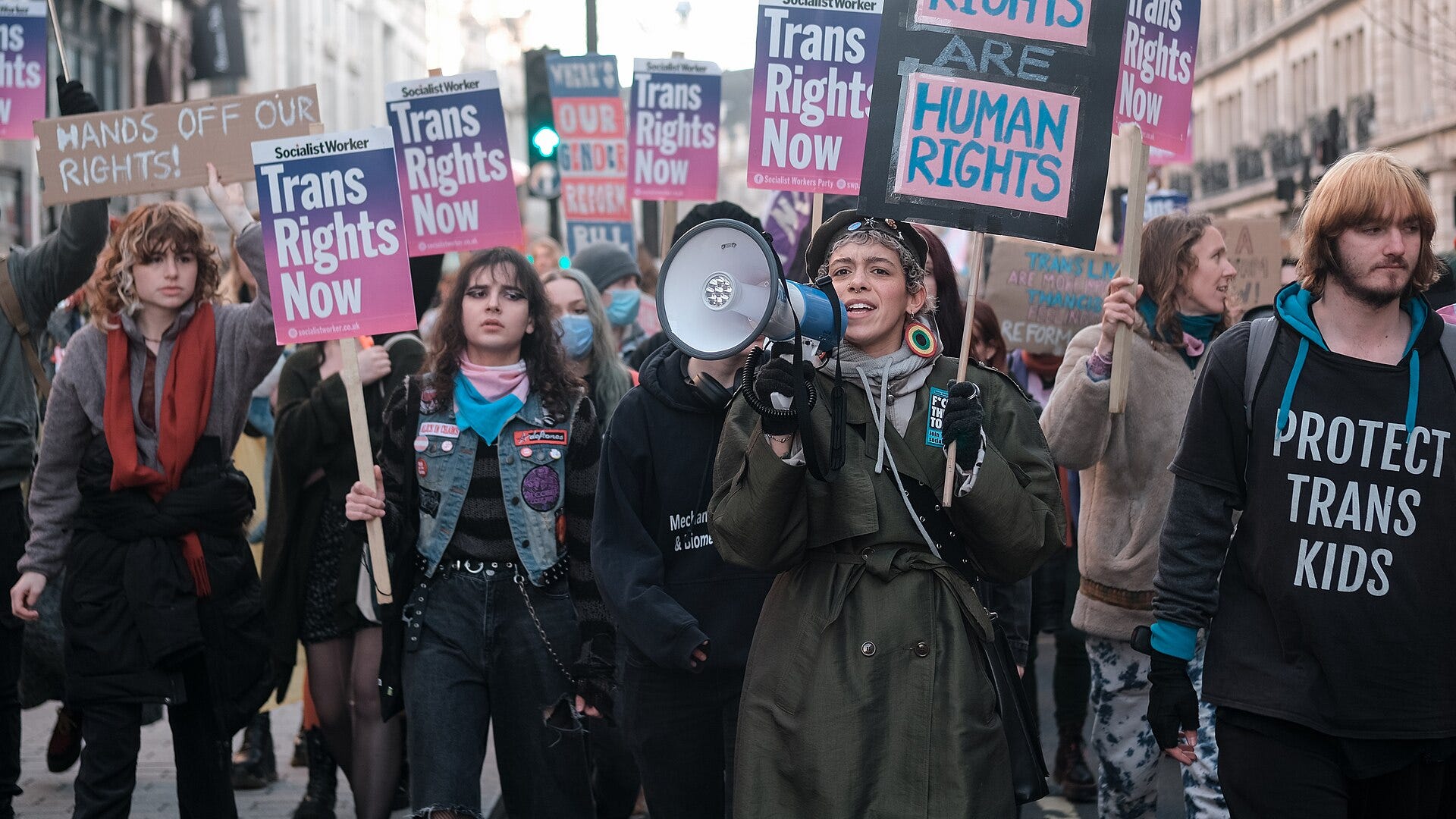
In these theories, the psychological factors listed above intersect with potent social forces, with these social experiences giving rise to a sex-gender incongruity in autistic people.
12. Feeling different. That sounds rather generic. Who among us hasn’t “felt different” in some way? But the supposed trans-autism link is that this deeply internal sense of not being like the others—especially feeling like an outsider among same-sex peers—makes autistic people more inclined to seek out other social groups in which this unsettling feeling can be alleviated, finding former outsiders who also felt this way but have now formed their own rule-based ingroups, such as those in the trans community (if there’s any form of “social contagion,” it’s probably along these lines). Compounded with the “weakened sex differences” idea above, this theory might have some legs.
13. Minority stress. Unlike “feeling different,” which is a subjective, internal sense of alienation, the driving factor in the “minority stress” explanation for the trans-autism link is the occurrence of external negative events, such as being bullied, ostracized, ignored, and so on. Interestingly, the causal arrow in this account goes in the opposite direction: children who are gender-atypical are socially penalized by their peers, and this induces various social difficulties that can coalesce into autistic-like traits. Wattel et al., for their part, don’t put much stock into this theory, as there’s no evidence that autistic traits fluctuate due to social conditions, at any stage of the lifespan.
14. Resistance to social norms. People with autism, this theory goes, are “free from normative influences when forming their gender identity, whereas neurotypical people are influenced by the gender binary norm.” In other words, those on the autism spectrum simply give less of a shit what other people think in general, perhaps—ironically—because of those very same theory of mind deficits that we saw earlier. Because they have trouble taking other people’s perspectives, coming out as trans isn’t as foreboding a prospect for autistic people as it might be for neurotypical people. Wattel and her colleagues designate this theory as “promising.”
15. Social communication. The gist of this explanation is that autistic people’s difficulty with social communication is associated with little understanding of gender norms. It’s a failure to learn what’s expected of their sex, in other words. There’s no doubt that people with autism struggle with social communication, but this theory falls flat for Wattel et al., as evidence suggests that “the tendency to seek out and engage in social interactions is not associated with [trans identity] in the general population.”
Somewhere in this long list—and probably at multiple crosspoints—is a true explanation for why so many trans and nonbinary people are on the autism spectrum. But it’s mostly just theories for now. In addition to involving complex developmental factors, the current politicization of these issues makes researchers’ earnest attempts to disentangle any causal mechanisms paramount to sticking their hands into a cultural hornet nest. Even tracking the ‘etiology’ of these ‘conditions’ implies medicalizing them as pathologies rather than as expressions of human diversity (see, gender diversity and neurodiversity movements).
Such megaphone debates are beside the point. There are clear clinical dimensions to all of this, often involving major psychological distress in vulnerable people, including kids. And brushing away trans issues as either a simple “woke mind virus” (talking point of the right) or framing them in a vacuous “born in the wrong body” argument (talking point of the left) only puts us off the scent, at least when it comes to finding the head-scratching autism link.
This newsletter is free. But it’s a lot of work! Like what you read? Toss a tip in the jar—any amount that makes sense for you—so I can keep overthinking things on your behalf.