


This article was originally published in French at Le Point on 22.03.2026
Islamic veiling practices fascinate me, largely because they are so foreign to me. Growing up in middle America in the 1980s, my exposure to veiled women amounted to seeing a handful of lacey-faced brides at various weddings, and that one time I saw my elderly aunt at a funeral donning a creepy black mourning veil. As a kid, it never occurred to me to ask why these women covered their faces in this way. And I bet they never asked themselves that question, either. They just did.
Now, as an anthropologically minded adult, these symbolic displays of Western females, in which modern women are essentially still hiding their mugs in the context of circumscribed, scripted social events such as weddings and funerals, are more intriguing to me. Sure, it may be ‘tradition’ refashioned into trendy aesthetics or even tied up with superstition. But at some stage, there was a practical reason. It’s like that story of the child who asked his mom why she always cuts off both ends of the ham. That’s just how it’s done, she answered. Unsatisfied, the child asked his grandmother the same question. Because that’s how my mother did it, she said. Finally, the boy asked his great-grandmother, who told him that her oven was so small back then, that she had to cut off the ends to fit a whole ham inside.
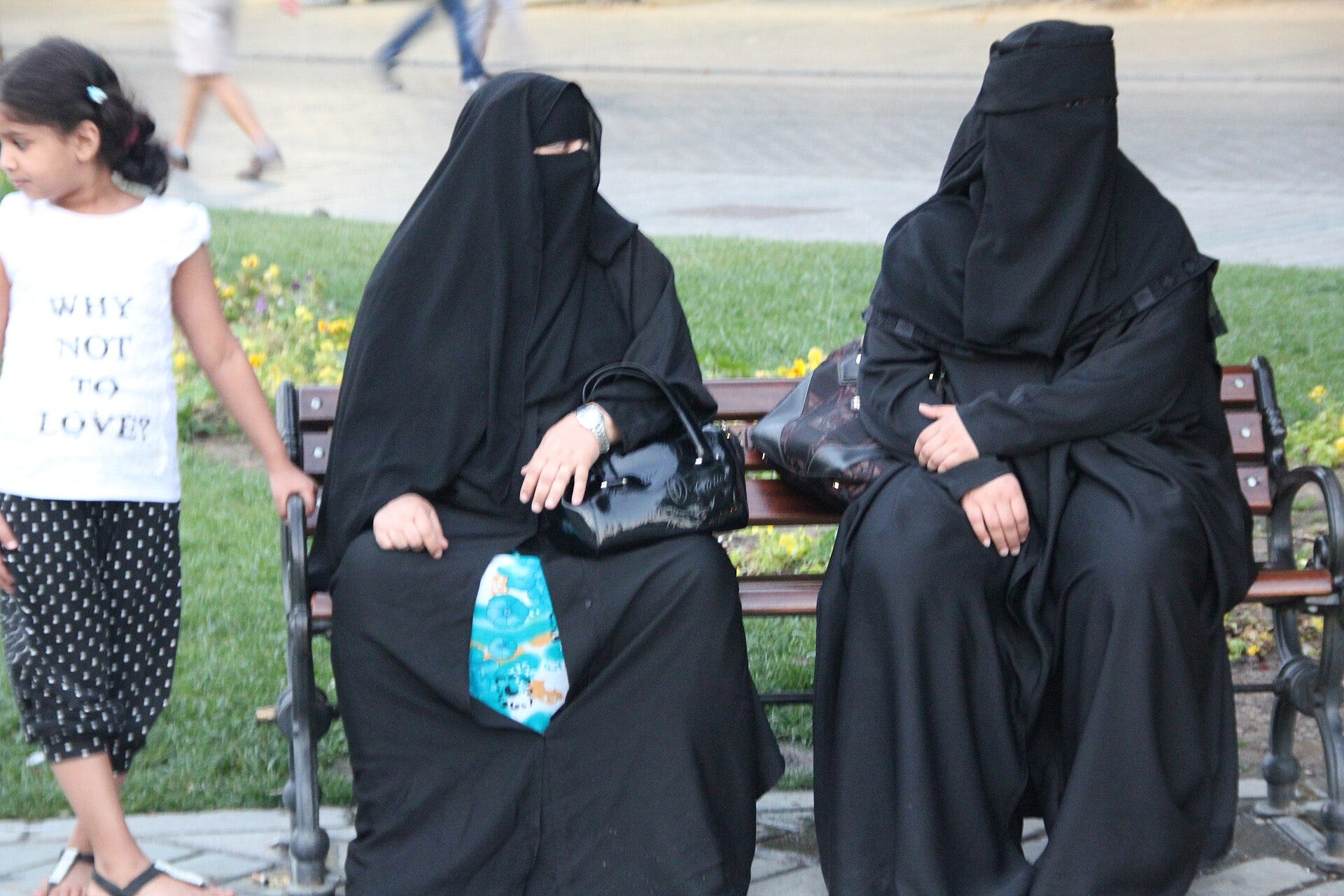
Obviously, there’s a big difference between wearing a wedding veil and being covered head-to-toe in a burqa (and I’m also not saying women are like hams, by the way). Whereas bucking that bridal fashion trend might raise an eyebrow or two among your more conservative wedding guests, it’s not like you’ll be arrested by the morality police. The point is, there may be a purpose—or at least function—to female veiling practices, Islamic or otherwise, that gets lost in wider cultural debate and feminist critiques. We may not like that purpose (hint: it really does have to do with male sexuality and the patriarchy), but it’s not something that has been arbitrarily imposed on women by men “just because.” Nor can it be easily brushed away as religious tradition, appeals to modesty, or by the rhetoric of Sharia law. These potent sociological factors certainly help to enforce veiling—sometimes with shocking violence—but they don’t really explain why they exist in the first place.
Enter psychologist Farid Pazhoohi of the University of Plymouth in England, who has sought to understand Islamic veiling practices through an evolutionary lens. Might there be an underlying adaptive function, even if the men—and women—in the Muslim world who endorse these oppressive clothing styles have never thought to ask the question in that way?
In fact, it’s rather astonishing that, prior to Pazhoohi, so few scholars ventured to approach this heated issue within such a framework. After all, so much of evolutionary psychology concerns our species’ responses to traits of physical attractiveness in the opposite sex. From facial symmetry, waist-to-hip ratios, skin texture, to breast size, it seems there isn’t much about female morphology that fails to trigger the apish male brain. When a culture adopts a clothing style that visually obfuscates the very cues those brains evolved to process in this way—women’s faces and bodies—surely that’s going to have reproductive ramifications.
Research has already shown, for instance, that women in conservative attire are rated lower in attractiveness and, relatedly, are less likely to have encounters with males. So, when the only thing you can see of a woman is, say, a dark mesh screen covering her eyes (burqa) or half of her face (niqab), this is probably going to affect people’s sex lives. She may be the most beautiful woman in the world, or just the opposite; she could be a fertile 30-year-old, or a postmenopausal 60-year-old, and so on. One just doesn’t know. Even if the garment hides only a woman’s hair (hijab), it may reduce her attractiveness to males dramatically.
It doesn’t take a genius to understand how such a proprietary male treatment of women’s bodies can be adaptive for the men in these societies. This is especially the case for those in committed long-term relationships (i.e., marriage). Anything that dampens the erotic interest of other males means that their wives are less likely to be approached, and that they, in turn, are less likely to be cuckolded. Veiling is also more strongly endorsed by men who live in high-risk environments, where infant mortality rates are high and resources are scarce. What may be less obvious, Pazhoohi speculated, is that such veiling practices may be adaptive for the women in this equation as well. Controversial stance, I know.
Again, not to sound like a broken record—as I say as much repeatedly in this column—but “adaptive” is a completely amoral term within an evolutionary theoretical framework. It means only genetically advantageous and it should not be conflated with human rights or even wellbeing. If you don’t understand that basic distinction, you’ve already lost the plot.
Here’s how the author explains this female-centric part of his “mate guarding theory of veiling” in a recent article published in the journal Evolutionary Psychological Science:
Veiling may serve as a strategic behavior aimed at securing male protection and resources, particularly for women who are married or have more children. This perspective challenges the notion that veiling is solely imposed by men and highlights how women may actively engage in veiling as a way to navigate social and reproductive challenges in their environment.
In other words, if it is true that women are capitalizing on this male penchant for controlling their visibility through veiling, then females who have the most to gain from this arrangement should be the main proponents of the cultural practice. And who has the most to gain? Well, in Pazhoohi’s model, those who are already dependent on men for resources—both for themselves and for their kids (i.e., “paternal investment”)—should favor veiling more than single ladies. “The rationale,” explains Pazhoohi, “is that these women, through an adaptive response to conform to male mate preferences, have a stronger incentive to adopt veiling as a means of signaling sexual fidelity and commitment to familial and societal expectations, thereby enhancing the likelihood of securing greater paternal investment from their partners.” Look, she’s essentially saying, you don’t have to worry about me getting pregnant by another man, because I’m literally blighting out my physical existence from lascivious eyes and removing myself from the market. By contrast, if veiling were used by single women to advertise their chastity and values to prospective husbands, then it’s they—not the already married women—who’d be more supportive of the practice.
Now, obviously, there’s a confound here. Married women are, in general, older (and therefore arguably more old-fashioned and conservative) than unmarried women. However, if Pazhoohi’s hypothesis is correct, then you’d expect married women and those with more children to be the real veil cheerleaders, even after controlling for age and other factors.
That’s precisely what he found. Using existing data from the World Values Survey that included the responses of women from ten countries (Algeria, Bangladesh, Egypt, Indonesia, Iran, Iraq, Jordan, Nigeria, Saudi Arabia, and Turkey), Pazhoohi homed in on their answer to one specific survey question: “In your opinion, how important is it for a woman to wear a veil in public places?” (on a scale of 1 = not at all important to 5 = very important).
Only women who identified as “Married” and “Single/Never Married” were analyzed (widows, divorced, separated, and so on were removed from the sample). This left a total of nearly 6,000 women. Even after controlling for age, religion, income, and education levels, he found that married women in these countries rated veiling higher in importance than did single/never married women. And in a separate analysis, he showed that the more children a woman had, the higher importance she placed on the practice as well. “Having more children increases a woman’s dependency on her partner’s resources, making it advantageous to signal commitment and loyalty through cultural practices such as veiling,” writes Pazhoohi. “This suggests that veiling may serve not only as a social or religious practice but also a strategic behavior that enhances the likelihood of continued male investment in the family.”
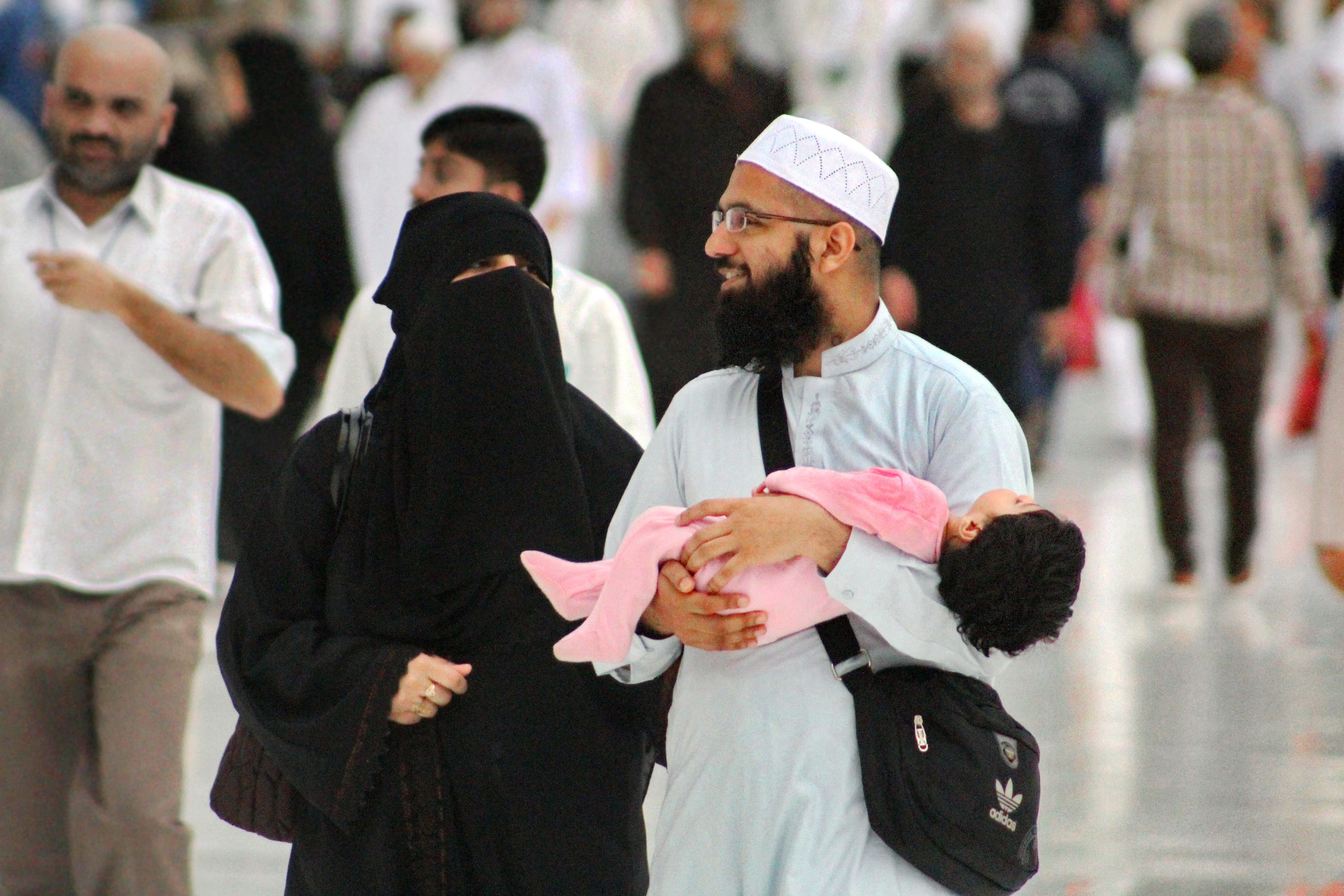


The next step in this research area is to determine whether veiling adherence actually predicts paternal investment by males. Right now, it’s just correlational data and, as Pazhoohi acknowledges, there are other ways to interpret them. For example, married women might just be answering this sensitive question out of fear of their husbands, not because they actually think that veiling is all that important.
Still, thinking about veiling from an adaptive female perspective—as a cultural tradition women can exploit to maximize their own reproductive interests under harsh conditions—is, at the very least, a novel way to look at it.
Or not look at it.
Like what you read? Toss a tip in the jar—any amount that makes sense for you—so I can keep overthinking things on your behalf.
Could veiling also be supported by married women as way to reduce the chances of their own husbands becoming attracted to women still in the market? It seems adaptive to make potential rivals lose their competitive edge by covering them up entirely.
What if Muslim women have agency of their own, and aren’t all NPCs controlled by men? Amazing someone has stopped to wonder.
(Sarcasm aside, it’s good someone has, if depressing how rarely it happens.)