


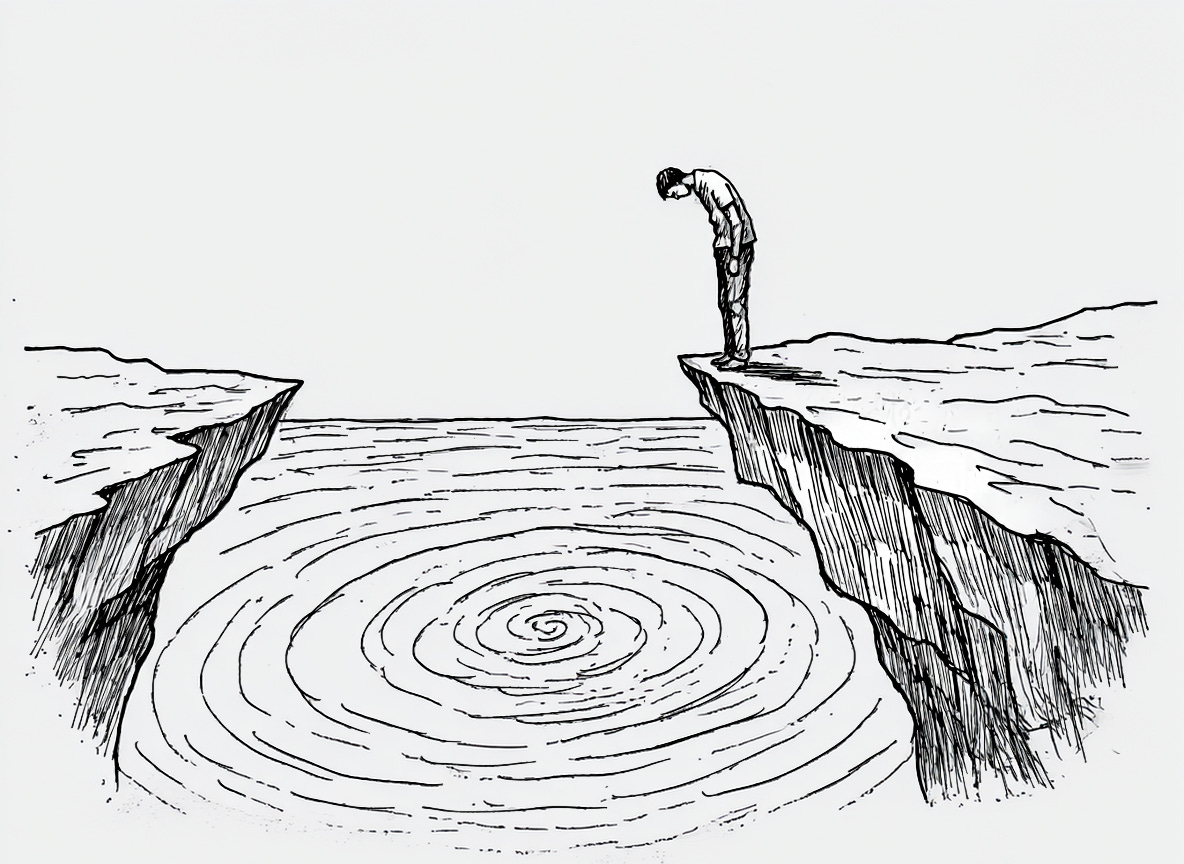
A version of this piece originally appeared in Slate in 2018.
“Suicide,” goes the popular expression, “is a permanent solution to a temporary problem.” The provenance is murky, but the internet attributes the saying to 1980s media personality Phil Donahue.
It’s a clever saying, and also one not altogether wrong. I can see why it’s had such viral appeal. Oftentimes a myopic focus on the present, accompanied by a flash flood of negative emotions, gas-pedals that fleeting impulse. Yet if we can survive that terrible moment, we may feel shockingly more composed just a day later.
This tends to be the prevailing narrative around suicide and suicidality—a message cloaked in a constant admonishment to “just reach out for help” if you are feeling this way, and someone will try to see you through to the other side. The problem with this, though, is the obvious reality that some problems really are permanent, thank you very much. We may, with the right therapy or psychopharmacological help, change our perspective of such problems so that they don’t cause us so much ongoing distress. But not all problems fade with time; some actually do get worse. It should not be irrational to acknowledge this existential fact, and yet it remains stubbornly difficult to talk about.
It’s important not to confuse the point I am trying to make with the fact that suicidal people are especially susceptible to poor decision-making. This is because acute suicidality, which involves feeling like one should die now, is a genuine altered state of consciousness. In fact, researchers have identified distinct cognitive biases that attend this mental state, including a distorted, perceptually elongated sense of the passage of time (the clock “slowly drips out,” as one woman who’d attempted suicide put it) and increased egocentric thought (the suicidal person is not being deliberately “selfish” but has impaired perspective-taking abilities, finding it literally difficult to grasp the catastrophic suffering their death may cause others).
However, this does not mean that all suicides are inherently irrational, nor does it mean they are all symptomatic of mental illness. Although it’s true that many of those who die by suicide have underlying conditions, especially mood disorders such as bipolar disorder, the catchall mental illness explanation only takes us so far. The oft-cited “90%” figure—that 90 percent of suicides are attributable to mental illness—is in fact dubious. It’s derived primarily from postmortem analyses (“psychological autopsies”), which are almost certainly subject to hindsight bias. When experts are given edited case histories of people who died by suicide without knowing they’ve taken their own lives, they are far less likely to see a mental illness.
Yet, in the popular discourse, suicide remains inextricably linked with psychological faults, in part because the concept of suicide feels inherently disturbing to people who haven’t experienced it, and in part because adding the language of diagnosis often helps us feel like we’re solving problems. I think the over-reliance on disease models surrounding this topic is a mistake for several reasons. For one thing, the mental illness lexicon is so loaded that everyday people just don’t consider themselves to be part of that medicalized conversation. Depending on your definitions, it may be technically correct to do so, but how many of us with periodic depression or anxiety see ourselves as “mentally ill”?
As a result, many individuals don’t self-identify as suicidal until it’s too late because killing oneself is something that only psychiatrically exotic, disturbed others would do. Those obligatory support lines that the media so liberally shares in the aftermath of a celebrity suicide? “Those are for people with real mental problems,” says the suicidal rationalist. “Me? I’m too sane.” This is about more than just semantics, because many of those at risk are tuning out of a vitally important conversation.
Over the past year or so, while working on a book about suicidality, I’ve received many harrowing emails from people who’ve meticulously laid out for me the “case” for their own suicides. It’s as if they’re saying, “I’ve crunched the numbers, and correct me if I’m wrong, but how is killing myself not an intelligent decision given these variables?” It’s easy in the abstract to say that all suicides should be prevented, and as someone who prides himself on being a sympathetic human being, this is my first instinct as well (my next instinct is to direct them to an appropriate help line). But as a scientist who trades in logical thinking, what often strikes me about these individuals’ descriptions of their lives and why they’re thinking of ending them is that not all of these people are obviously mentally ill. Rather, in a very real sense, the opposite is true—they’re approaching often impossible situations from entirely rational places; indeed, they’d be more delusional not to at least feel suicidal.
By conceptualizing suicide as an act that only mentally ill people consider, intelligent people—the ones who’ve crunched the numbers and have come out with unfavorable estimates for tolerable living—are left feeling marginalized. One of the most frustrating findings in the field of suicide prevention is a stubborn positive correlation between suicidality and treatment resistance: The more suicidal a person, the more unlikely they are to seek help. In fact, up to 78 percent of those who die by suicide explicitly deny being suicidal in their last verbal communications. That’s revealing of something very, very wrong in the way we’ve been dealing with this grievous problem.
In the book, I tell the devastating tale of Vic McLeod, a brilliant but troubled 17-year-old who jumped to her death from a 10-story building in 2014. It was only much later that her parents found the diary she’d been keeping in the months leading up to her death. Her parents shared it with me. One line—logical libertarianism laid bare—haunts me still: “We are each given a life. We’re supposed to live it. I don’t. It’s as simple as that.” (In fact, it wasn’t as simple as that, as other passages revealed she was deeply ambivalent about her death wish.) “I will be that girl who was sick. Sick in the head,” wrote Vic shortly before she took her own life. “I don’t think I am. I just want to go.”
So, what am I suggesting as an alternative to the overly medicalized suicide discourse, one that continues to posit suicidal feelings as the litmus test for insanity? Perhaps just a realization from those who would weigh in on the subject, including professionals and the public alike, that suicidal thinking is actually more human, and sometimes even more rational, than is being conveyed. Asking someone if they’re experiencing suicidal thoughts is always better than avoiding the subject. It can and often does work as basic intervention. But if the person—rightfully so—fears being seen as mentally ill or, worse yet, is despondent over the prospect of being forcibly hospitalized for a perceived pathology, we’re deluding ourselves in expecting an honest answer. It may be scary as hell for us to hear, but I think saving lives requires a radical shift in the conversation; desperate people need to be free to talk openly about suicide without feeling that the listener is clinically parsing their every word.
Indeed, for so many of us—especially us rationalists—it is this shared appreciation of the fundamental meaninglessness of life, of the funny tangibles of chaos, of being momentarily alive as the fleeting, flawed creatures we are that, ironically, offers us the greatest hope against suicide. What other choice do we have? Sometimes, we have to embrace the absurdity of living to survive our own sanity. One of the cruelest tricks of the suicidal mind is that during those darkest of hours, other people can seem to us one-dimensional and cartoonish, the almost-limitless depths of another consciousness is blighted out by our own nagging, unbearable self-awareness. The truly suicidal person is embraced by a loved one and still feels oceans away.
Yet that bubble of egoism can be ruptured in the most unexpected of ways, too. In my early 20s, I once found myself in the crowded aisle of a grocery store, oblivious to my surroundings, feeling crestfallen, depressed, and well, imminently suicidal over some drama I’ve long since forgotten. While staring at the shelves in a sort of shell-shocked state, a firm but benevolent hand, seemingly out of nowhere, squeezed my forearm. “Step out of yourself for a minute and let me pass,” said a smiling old man leaning over into his cart. It’s a philosophy unto itself; and I still try, sometimes desperately, to live by those words.
This newsletter is free. But it’s a lot of work! Like what you read? Toss a tip in the jar—any amount that makes sense for you—so I can keep overthinking things on your behalf.