


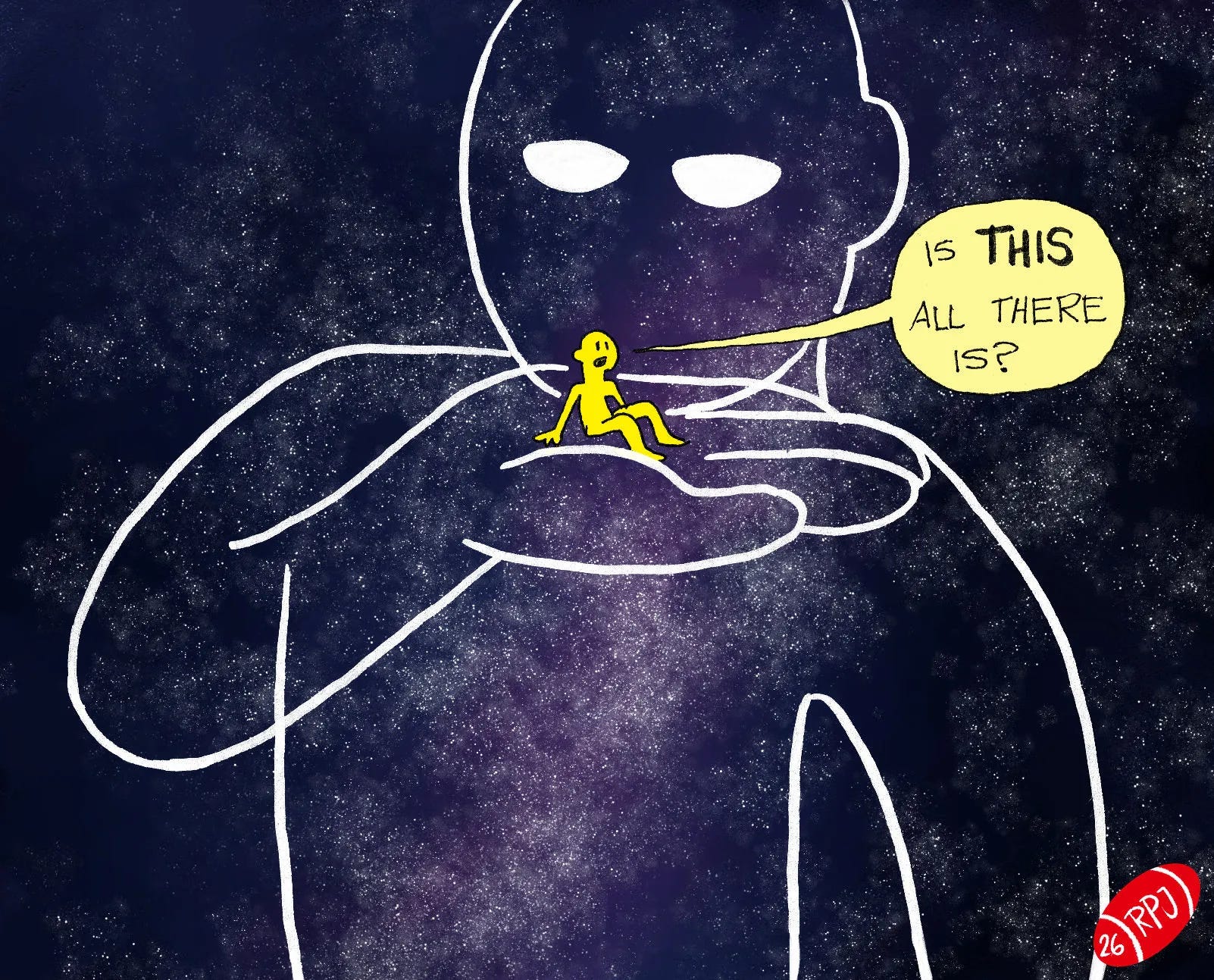
There was once a modern art installation inspired by my book Why Is the Penis Shaped Like That? Something about a plunger and a head in a toilet. You had to be there.
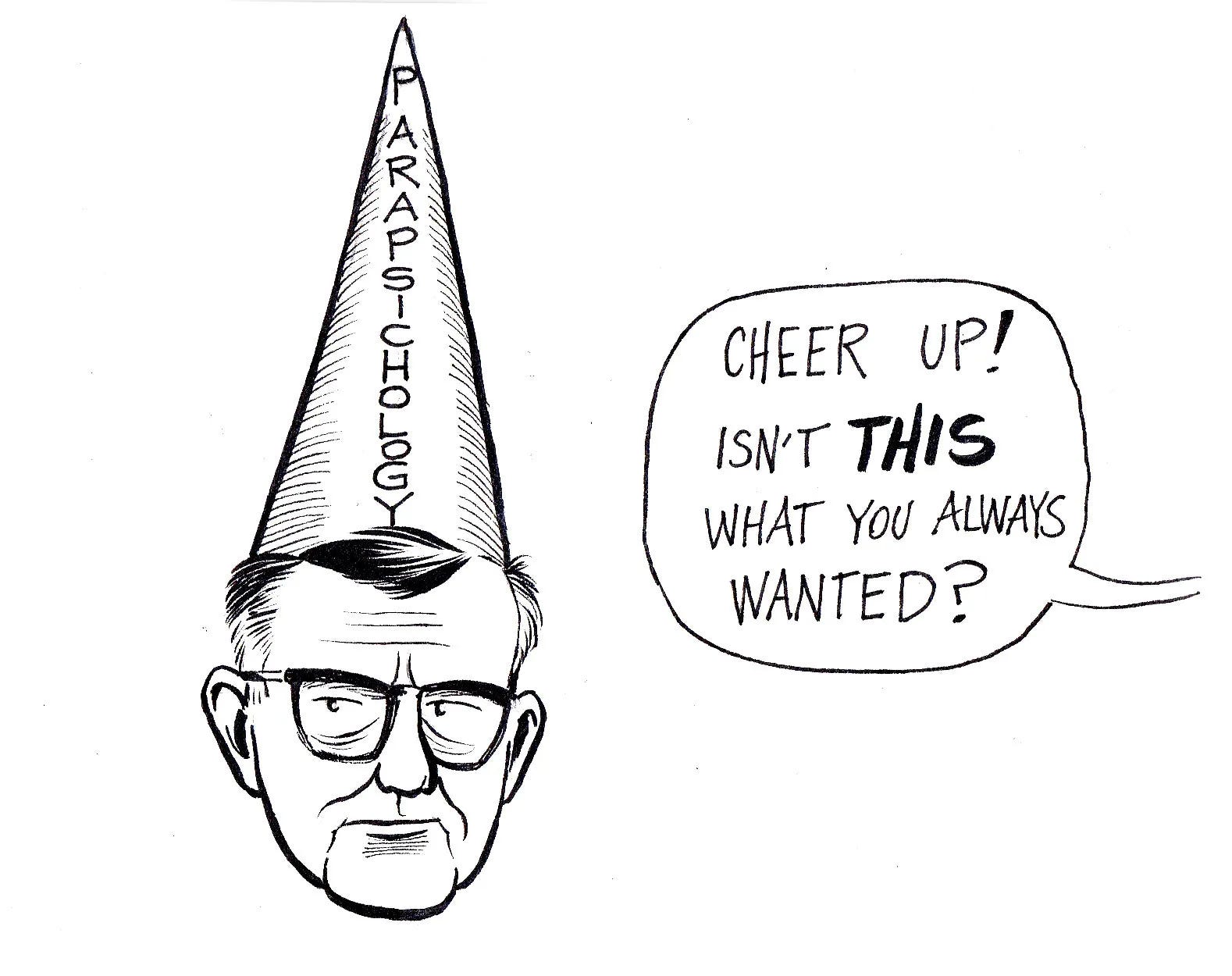
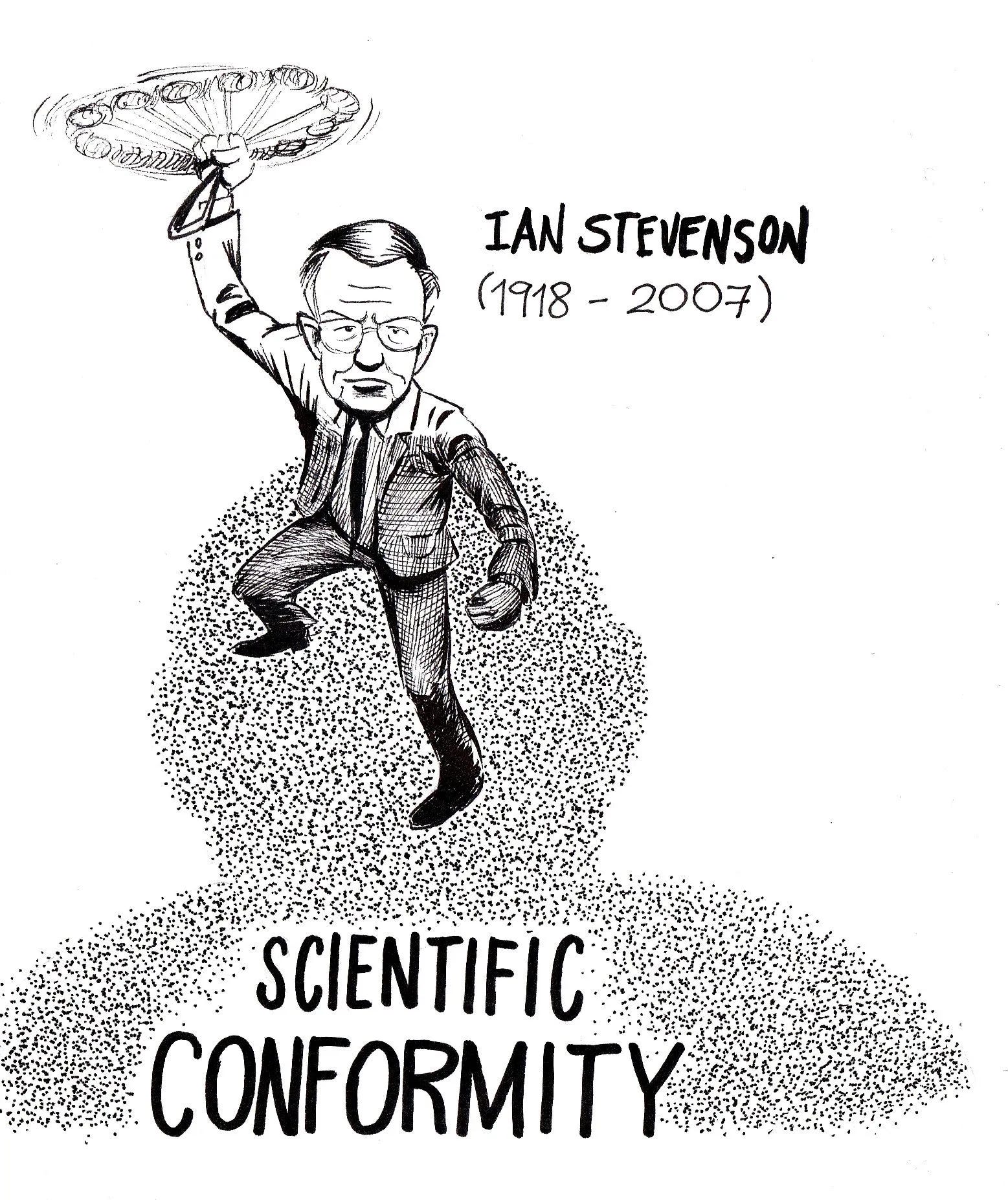
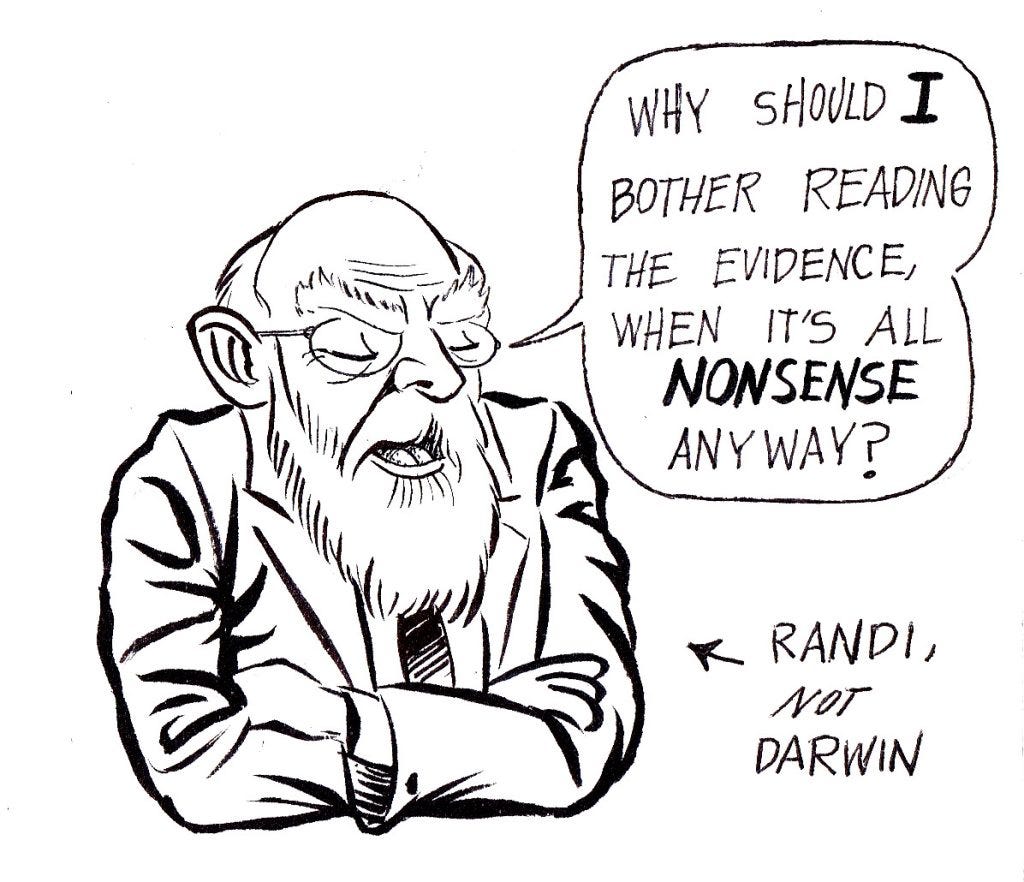
But this recent article on The Incredible Afterlives of Dr. Stevenson over at the Daily Grail may be my very first illustrated review. Some visual highlights below, but be sure to read the full article to see the book’s entire 472-page journey spelled out in pictures.
And while I’m at it, a few other reviews have recently popped up as well, including this very thoughtful one at The Skeptic…

…and this interesting opinion piece at Chronicle of Higher Education.

That last one ended with a prickly — and what I felt was quite cruel — barb about Ian “wasting his life.” That certainly doesn’t reflect my views. It reminds me of one of Ian’s very quotable quotes that didn’t make it into the book, but still stuck with me.
Survival after death is not a matter about which most persons can maintain neutrality. I have had ample reason to learn myself that nearly everyone has strong opinions on the subject and some persons seem to be controlling impulses to violence the moment the topic is merely mentioned. For most people, certainty about the matter appears to come much more readily than doubt.
The book was also just given an extensive review at the Times Literary Supplement. “Bering … is strict with his subject throughout … [the cases] are also made entertaining in a junky, televisual way. Bering is an excellent medium … Colourfully depicted … Stevenson is portrayed as scrupulously mathematical … fanatical about data; yet he was also consumed by his pursuit of the unprovable.” I’m told ‘junky’ is being used favourably here, more like ‘bingeable’ than a trash heap. I hope that’s true!
The book was, as Richard Wiseman aptly put it in The Psychologist, a genuine labour of love. You don’t have to believe in the afterlife to appreciate Ian’s remarkably colourful life story and his still-unacknowledged role in the history of science. And you don’t have to be a credulous consumer of pseudoscience and woo-woo tales, either. It is a middle ground. All Ian ever asked for was for us to appreciate the surprising complexity of the issues, to evaluate the evidence he spent decades meticulously gathering, and to have an empirically informed opinion on the “survival question.”
Belief is irrelevant; it’s the evidence that matters. And it’s okay to grapple with the inconclusive evidence that Ian left us with. I spent three years writing the book, and I’m still not a believer. But I am more openminded. Nobody wants their brains falling out. But an open mind, Ian liked to remind people, is not an empty mind.
