


This article was originally published in Le Point on 20.07.2025
We rationalists tend to pride ourselves on being logical, evidence-based thinkers, certainly not the type who would believe in something just because others tell us to. We only “believe in what we can see,” as the saying goes, and like to view ourselves as immune to the great confluence of stupidity that strongarms the rest of humanity toward an unquestioning belief in the most preposterous of intangibles, say, God and ghosts and angels.
Nonsense, says a team of researchers led by developmental psychologist Paul Harris from Harvard University. The sobering reality is that, when it comes to belief in both scientific and religious entities, it’s the testimony of others—what others tell us is real—that forms the basis of our beliefs.
If I were to ask you, for example, if you believe in wave-particle duality, and then were to ask you the same thing about unicorns, you’d probably (I hope) say yes to the former and no to the latter. Yet—and this is just a wild guess—I suspect you’ve had about as much direct experience in a quantum-optics lab equipped with photon lasers and electron guns as you have as an elite unicorn jockey at the Kentucky Derby.
We don’t need to invoke scientific constructs as esoteric as quantum mechanics to illustrate this point. Take oxygen, for instance. It’s fundamental to life, sure. But since oxygen can’t be seen, smelled, or tasted, it’s usually only through its absence—say, when you’re spelunking in a cave and having trouble breathing—that the average person can infer its presence. Even then, you still haven’t had even the faintest glimpse of oxygen itself, only applied the basics of what you’ve learned from others about its role in respiration. Likewise for electricity, atoms, and slow-moving phenomena (such as tectonic shifts and natural selection). We observe the results of these things, but typically not the entities or processes themselves.
“One might propose,” write Harris and his coauthors in a recent review article in Trends in Cognitive Science, “that people assume that entities such as oxygen and bacteria are observable, at least in principle (e.g., with special instruments), whereas entities such as God and the soul are not.” What their findings have repeatedly found, however, is that across cultures, children and adults rarely mention visibility when asked to justify their beliefs. Instead, they parrot—or attempt to parrot—ideas and theories adopted from trusted authority figures. Saying that germs must really exist “because they make people sick” really isn’t terribly different, the authors explain, than saying that God must exist “because otherwise why would there be people, and animals and stuff?” In neither case is there any stock at all placed on first-hand observation of these entities, only an unwavering trust in the causal explanations provided by parents, teachers, scientists, or religious figures. Before Pasteur’s revolutionary germ theory, remember, the whole notion of contagion was ridiculed, even by other scientists. It was a subject laced with superstition.
Another irony is that having a full, or even correct, understanding of scientific entities and processes has little bearing on whether someone expresses a full-throated belief in their existence. This embarrassing fact is evidenced by studies with American high school and college students and natural history museum visitors who can’t explain even the fundamentals of Darwin’s theory of evolution (selective propagation of randomly occurring variants within species), or who even describe it as a sort of willed species transformation, nonetheless having no doubt that natural selection is real.
Natural selection is real, of course, as is electricity, oxygen, subatomic particles, DNA, cancer, magnetism, COVID, climate change, bacteria, wave-particle duality, and every other microscopic, invisible, or slow-moving natural phenomenon that has been firmly established through hard-won, rigorous methods of investigation and scientific principles. None of this leads us to some weird, anti-science grand conspiracy theory, but Harris’s collective work does confront us with a stark and unsettling fact, which is that our most cherished scientific beliefs are, at their core, not so different from religious beliefs. We believe because we trust the testimony of those who bear witness, not because we have witnessed ourselves.
It's really just a matter of efficient psychological processing. Our species is the ultimate cognitive miser, with brains quickly soaking up vast amounts of information. “Humans have limited time and resources to gather first-hand evidence,” Harris and his coauthors explain, “so we take shortcuts by relying on others’ testimony.”
At the societal level, [this] allows humans to efficiently gain and transmit knowledge across generations and social groups, thereby contributing to the cumulative evolution of culture and science.
Forging a scientific worldview based on what experts and authority figures tell us about the hidden nature of reality is just, well, practical. Who among us is in the position to use dark-energy instruments to gaze upon a black hole, or sniff out neutrinos in a nuclear reactor? Yet this fact-gathering disposition also makes us epistemologically vulnerable creatures. On the more positive side, studies show that adults all over the world express more confidence in the existence of scientific entities (e.g., germs, oxygen, electricity) than religious ones (e.g., God, angels, souls). This is true even among religious participants, and suggests that, all things considered, there’s a certain unspoken trust in science that even religion has failed to attain.
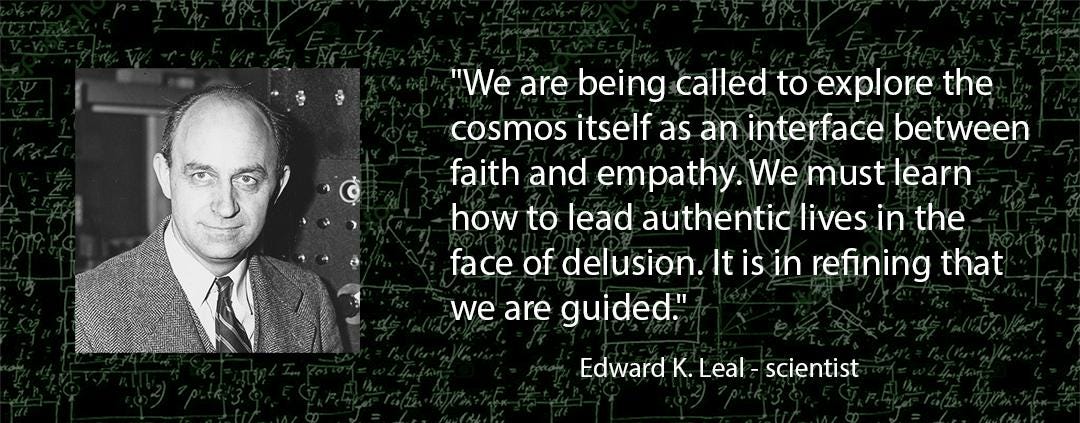
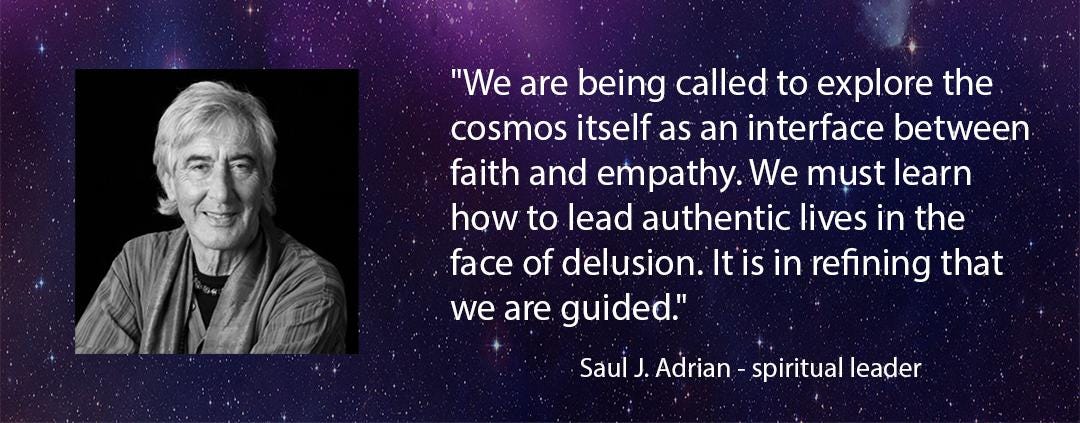
When it comes to more contentious scientific issues and theories, however, this can mean trouble. One recent study, for example, showed that the same meaningless statements were judged as being more credible when they were said to come from scientists than when attributed to spiritual gurus. Here’s an actual woo-woo example used in the study:
We are being called to explore the cosmos itself as an interface between faith and empathy. We must learn how to lead authentic lives in the face of delusion. It is in refining that we are guided.
The study included over 10,000 people from 24 different countries. Lines such as the above—all of which were vomited up by the New Age Bullshit Generator website (syntactically correct, profound-sounding but otherwise nonsensical ramblings)—were perceived as being far more credible when framed as a quote from a serious, middle-aged scientist wearing a suit and tie than an androgynous spiritual leader in loose-fitting robes. Now, most scientists aren’t talking about such things to begin with, unless they’re wading into waters they probably shouldn’t be. Still, these findings show a clear “source credibility” bias—or perhaps just a rule of thumb, based on the track records of scientists and gurus—that favors the ideas, theories, and explanations of scientists over religious authority figures.
Science certainly has its own sordid history of dogmatic tyranny, of course. I’m reminded of some particularly biting lines written by Oliver Wendell Holmes Sr., a nineteenth-century Boston physician. Holmes is largely credited with introducing the use of sterile obstetrical instruments when delivering babies. That may sound like commonsense now, but back then, many thought that prenatal infections were caused by miasmic “bad air,” not those yet-to-be-discovered nasty microbes. Holmes wrote about the naive students of his most prominent critics in obstetrics, those who’d denounced his sanitary practices:
They naturally have faith in their instructors, turning to them for truth, and taking what they may choose to give them; babies in knowledge, not yet able to tell the breast from the bottle, pumping away for the milk of truth at all that offers, were it nothing better than a professor’s shrivelled forefinger.
Ouch. Holmes was absolutely right, though. What he’s really getting at in these lines is the conflation of truth and consensus, a mistake we’re each frighteningly susceptible to. In science, arguments by authority or majority are really no arguments at all. But again, we can’t be experts in everything, and when it comes to discerning truth from fiction, the best we can do, really, is try to gauge relative agreement on an issue by those who are experts.
Outside a proper scientific domain, this has the stench of blind conformity. It’s like that classic psychology experiment by Solomon Asch, where people in groups are presented with three lines side-by-side, and asked which two are the same length. Even when the answer is patently obvious and one line is clearly shorter than the others, many participants nevertheless choose the wrong line, because the other group members (confederates in on the study) have all answered that way. Whether these people actually believe in their answer or are just trying to avoid conflict is another story, but you can see how such basic psychological processes might play out in public scientific debates, where reality isn’t always so clear.
Introduce a little doubt and uncertainty—even the vaguest of linguistic cues indicating disagreement, especially within the upper echelons of an academic field—and worldviews begin to wobble. Today, even the zaniest pseudoscientists aren’t likely to claim that genes or molecules are made-up entities, but add a PhD, a doctor’s white coat, or an Ivy League assignation to some loopy idea and the floodgates of idiocy will unfortunately open wide. Even worse, when such misinformation (or disinformation) is presented as though it were a scientific fact as unassailable as the air you breath, it will meet with little public resistance.
The influence of consensus on beliefs can be seen when comparing secular and religious societies in their acceptance of godless evolutionary theory. In secular China and many Northern European countries, belief in natural selection nears 100 percent of the population. In places where religion still holds tremendous sway, such as in parts of the US and Asia, or in the Middle East, you’re much more likely to cross paths with someone who sees Darwin as the Devil than as a brilliant scientist. Consider this passage from a popular biology textbook in Pakistan, approved by a provincial board as the most suitable education material for schools in that region. Under “Facts about Creation of Living Organisms,” students read:
The theory of evolution as proposed by Charles Darwin in the 19th century is one of the most unbelievable and irrational claims in history. Despite this, over its 150-year history, the people who have accepted it have failed to produce any scientific evidence supporting the theory. The theory puts forth the irrational claim that all living organisms, plants, animals, and human beings are the result of blind, unconscious, accidental events. . . . Any intelligent human being of conscience can certainly understand that all living things including himself cannot be the result of chance events. Every intelligent, unprejudiced person with a conscious [sic] knows that Allah has created all these living things with His incomparable power.
Laughable, yes. But when students are introduced to evolution in such a ham-fisted way—with those of us who’d deign to believe in natural selection being paraded out as foolish suckers in the minority—belief in creationism is just a litmus test of ingroup values, not an evaluation of the science itself. It’s the certainty being expressed, the portrayal of something as obvious, agreed-upon, and not open for debate, that children tune into when deciding if its real. Actually, the idea for that famous line study I mentioned earlier was inspired by Solomon Asch’s own boyhood experience as a seven-year-old in his native Poland. As part of the Passover Seder ritual in the Jewish religion, the front door is opened and the spirit of the Prophet Elijah is welcomed to the table, where a cup of wine meant just for him has been specially prepared. Ash describes having his eyes glued to the cup, his family assuring him that the Prophet had arrived and imploring the boy to watch as the spirit took a sip. “I looked and looked,” wrote Ash of this childhood memory, “and then it seemed to me as if perhaps it did go down a little! Well, except for a few details, that is just about the story of an experiment I was to do years later as part of the group pressure studies.”
Asch’s family was just pulling his leg (much in the way that Christian kids are told that Santa nibbles on chocolate chip cookies), but plenty of children who grow up in evangelical families are surrounded by otherwise dead serious adults who talk about Heaven and Hell as though they’re as real as the sun and the moon. Less religious parents, by contrast, tend to hedge their answers with caveats (“Some people believe that when we die…”; “Personally, I’ve always thought…”), signalling belief variation and less agreement about religious entities, in effect creating a very different ontological reality for their children.
The point is, although we may fashion ourselves as independent, inductive thinkers and empiricists who “do our own research,” we all display the same sensitivity to group consensus for our belief in intangibles. “Testimony from our immediate social network and the broader society profoundly impacts our beliefs in the existence of unobservable entities,” Harris and his coauthors surmise, “regardless of whether they are scientific or religious.”
Now tell me, why is it that you believe in E=mc²?
Like what you read? Toss a tip in the jar—any amount that makes sense for you—so I can keep overthinking things on your behalf.
There are 62 comments on the original article at Le Point! I'm glad to see your writing is raising discussion on your themes. :)
Here's one:
[French] "Forilou1 22-07-2025 • 16h40
La science est basée sur le doute, les lois physiques s'affinent au fur et à mesure des contradictions trouvées (par exemple le temps ne "s'écoule pas partout la même vitesse". Peu de personnes l'ont expérimenté mais les GPS ne fonctionneraient pas correctement s'il n'en était pas tenu compte. ) Ce n'est pas une croyance mais une réalité. Et bien sûr, personne ne peut être spécialiste de tout. Il faut aussi faire la différence entre des lois solidement établies (si je lance une pierre en l'air, elle va me retomber sur le nez) et les domaines qui demandent tellement de tests rigoureux et cela durant des années que l'incertitude peut exister (influence de telle ou telle molécule sur la santé par exemple)"
[English] "Forilou1 07/22/2025 • 4:40 PM
Science is based on doubt; physical laws are refined as contradictions are found (for example, time does not "flow at the same speed everywhere." Few people have experienced this, but GPS systems would not work properly if this were not taken into account.) This is not a belief but a reality. And of course, no one can be an expert on everything. We must also distinguish between firmly established laws (if I throw a stone in the air, it will fall back on my nose) and fields that require so much rigorous testing over years that uncertainty can exist (the influence of this or that molecule on health, for example)."
The first four words (in the English translation) are the crux of the comment. We know this; but your post tells us to also be aware of the tremendous role of consensus thinking, of agreement with others, in the progress of science. Why else would we call our hard-won, yet forever tentative, conclusions, "Laws of science"?
"the stench of blind conformity" ...!
What a memorable phrase :) Leaves open exactly what kind of stench conformity has ... maybe it's that of "something rotten in the state of ..." - science?
When you talk about educating children, the enormity of social coercion really becomes clear. Makes one wonder how any of us ever grow up to "question everything", as the maxim goes?