


Ian Stevenson’s cautious approach to near-death experiences (NDEs). An extract from my new book The Incredible Afterlives of Dr. Stevenson. [As recently published in The Psychologist magazine.]
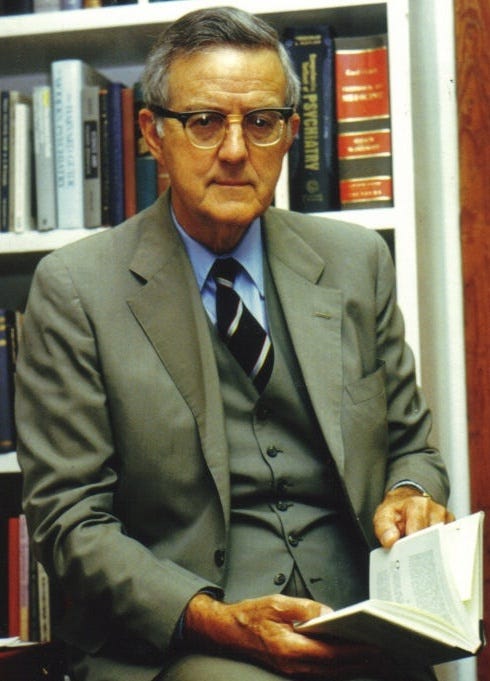
Life After Life by Raymond Moody popularized “near-death experiences” (NDEs) and launched a booming cottage industry that still can’t keep up with customer demand. Although there’s a much more restrained academic component (and even a respected peer-reviewed Journal of Near-Death Studies dating back to 1982), the genre is now mainly ecstatic accounts of people claiming they’ve died and come back to life, and with amazing travel tales to tell. Ian Stevenson’s early thinking about “out-of-body experiences” (or “OBEs”) presaged what has since become a predominantly American—and largely religious—business of celestial confabulations.
An OBE doesn’t necessarily entail a near-death experience (NDE) since other dissociated states are known to induce similar feelings of leaving one’s body. But Ian was certainly aware of the old Society for Psychical Research correspondences in this vein. For instance, there were letters from the late nineteenth century between William James and an experienced mountaineer who believed he’d frozen to death in the Swiss Alps. Prior to being revived by fellow hikers, the adventurer remembered a piercing pain before crumpling lifeless into the snow-covered granite. Suddenly, he told James, he was transformed into “a ball of air in the air, a captive balloon still attached to earth by a kind of elastic string. . . . How strange! I see better than ever, and I am dead. Looking down, I was astounded to recognize my own envelope.”
Ian was also very familiar with so-called “Peak in Darien” cases. The phrase derives from the 1816 poem “On First Looking into Chapman’s Homer” by John Keats. That work of literature recounts an expedition by a team of Spaniards who, upon climbing a peak in Darien (in what is now Panama), expect to see a vast continent spread out before them, but instead are met by another ocean. Keats’s poem has nothing to do with parapsychology, or even death, but the idea of getting an unexpected sight “on the other side” provided a useful metaphor for the Anglo-Irish writer Frances Power Cobbe. NDEs weren’t really in fashion then, but her 1882 book The Peak in Darien was a spiritual “octave of essays” featuring people’s close brushes with death. Sometimes, these included encounters with the spirits of those the percipient didn’t expect to see, since they had no idea that these people had died, too. Ian believed these Peak in Darien cases were important, as they mitigated against an apparent expectancy bias in which the dying person’s hopes about reuniting with loved ones known to have died could be furnishing dreamlike content.
In the 1970s, Moody and other researchers began interviewing people who claimed to have died and come back to life. Not every experience was the same, nor did everyone report all the classic features of an NDE, but there were some notable recurring aspects. These included a great sense of serenity; the feeling of having left one’s body and sometimes an accompanying autoscopic vision (seeing one’s “envelope” from an external point of view); a distorted perception of time (with “personal time” unfurling infinitely slower than “solar time”); enhanced perception of light (often described as moving through a tunnel); overwhelmingly vivid, sensory-rich memories that give the impression of a panoramic life review; and, perhaps most intriguingly of all, super-cognitive function. This last feature is characterized, according to many people who say they’ve had an NDE, as suddenly gaining unusual clarity and speed of thought, as well as an astounding acuteness of perception. “Realer than real,” as one said.
Ian thought that self-reports of enhanced cognitive function in NDEs were impressively on brand with the late 19th-century psychical researcher Frederic W. H. Myers’s notion of a wild postmortem consciousness let loose from the prison of its brain. “What most persons describe,” Ian explained, “is remembering themselves as having enjoyed unusual mental clarity at the time of nearly dying. Seldom, if ever, they tell us, have they felt more alive than they did during the near-death experience.” The sum of these experiences might, he added, “provide further evidence that, at a time when the person’s physiological condition might lead us to expect that mental functioning would be diminishing or even absent, it is instead speeding up and becoming more vivid. This . . . suggests that the relationship between mental and physical functioning may not be as straightforward as many scientists have long assumed.”
* * *
Nonetheless, this distinct sense of having a “superior emancipated intelligence,” as the British writer Edward Bulwer-Lytton provocatively called it, wasn’t terribly convincing to Ian that the patients’ souls had momentarily departed. He found such first-person accounts intriguing, potentially even fundamental to addressing the survival question, but he made no secret of his distaste for the tabloid trend precipitated by Moody and others’ mainstream works. This wasn’t because he didn’t believe those who reported an NDE, or that these people had indeed had a life-altering experience. It was just that, with few exceptions, they rested entirely on the person’s subjective accounts. After all, a person’s impressions of having enhanced cognitive function didn’t mean that they had enhanced cognitive function.
Moreover, the concept of an NDE was (and remains) poorly understood. In later work, Ian and his coauthors reviewed the medical records of forty patients who reported an NDE and found that most were nowhere near death when they claimed to have left their bodies. Only eighteen, in fact, were at risk of dying on the operating table or without urgent medical intervention. Still, most thought they’d slipped away. Ian blamed the media’s saturation of NDE stories for rampant “fear-death experiences.” He and his co-investigators argued, “We may have here, an example of contaminating effects from the widespread publicity given to these experiences, especially in the US. Because people near death have been reported to have unusual experiences, someone who has a similar experience may falsely conclude that he or she must have been near death.”
From a psychological perspective, our anticipation of death under conditions of extreme duress, combined with cultural and religious beliefs and a soaring human imagination (and in medical settings, a brain often pickled in analgesics), may engender similarly vivid OBE imagery. If you’ve ever pictured your own funeral, you get the idea.
There’s still that subset of cases involving patients whose medical records show that they really were close to death. Even these, however, can’t provide the standard of evidence for survival that serious parapsychological scientists have come to expect. NDEs may have profound and lasting effects on those who have them. Yet these extremely powerful, private blasts of consciousness can also be explained by normal mechanisms. The standard wet-blanket hypotheses include delusions induced by altered blood gases, temporal lobe malfunctions, a flailing limbic system, and neurotoxic metabolic reactions. The common denominator is that NDEs are engrossing, and often euphoric, hallucinations of death-rattled brains.
“The consensus of many people who study the evidence for life after death has been that NDEs may have something to contribute to the study of altered states of consciousness,” Ian explained in a 1998 article in the Journal of Scientific Exploration coauthored by his close colleagues Emily Williams Kelly and Bruce Greyson, “but not to the problem of survival. . . . [O]ut-of-body experiencers, including near-death experiencers, are in fact still alive at the time of their experience and have not existed independently of their bodies. Even those persons who may have been pronounced dead by medical personnel were physically intact enough to have been revivable. Consciousness may therefore seem to be detached from the physical body but may still remain dependent on it for its continued existence.”
Ian also believed, however, that one extraordinarily rare feature of NDEs—so rare that you can probably count the number of solid cases on a hand with a missing digit—could be of central importance to the survival question. This was evidence of “veridical paranormal perception,” which Ian described as “those rare instances in which the patient demonstrates knowledge of events, objects, and people of which he could not have become aware through the normal sensory channels while he was ostensibly unconscious. Such a patient, after recovering consciousness, narrates events that took place beyond the range of his sight and hearing while his body was lying inert and seemingly dead or nearly so.”
* * *
There are two textbook NDE cases that are so frequently invoked as proof of the afterlife that they’ve become more like urban legends, the vicissitudes all but vanishing in the retellings. Whether we like it or not, the materialistic devil is often in the details.
The first is the case of the wing-flapping surgeon. A fifty-three-year-old truck driver who’d undergone emergency heart surgery said he drifted out of his body and looked down to see one of the surgeons making comical gestures, moving his elbows as though flapping his wings. On hearing this, one of the other surgeons knew immediately what the patient was referring to. Dr. Takata, the lead cardiac surgeon, had the habit of flattening his palms against his chest and pointing out surgical implements to the nurses using his elbows, because after scrubbing in, he didn’t want his ungloved hands touching anything until the surgery began. Ian and his coauthors learned from the medical records that before being knocked out with general anesthesia prior to the main operation, the patient was first given a local anesthetic so that an intra-aortic balloon could be inserted. “It occurred to us,” the researchers wrote, “that [the patient] might have seen Dr. Takata ‘flapping’ his elbows when the balloon was being inserted but before he was given general anesthesia and lost consciousness, and that he later confused the order of events.” So they asked the patient for further details about what else he’d observed when he saw the doctor flapping his arms. “[The patient] said he saw Dr. Takata standing alone over his opened chest, which was being held open by metal clamps, and he also saw two other surgeons working on his legs.” This latter observation, recalled the patient, had confused him, as he didn’t understand why they were working on his legs when he was there for heart surgery. (They were busy stripping a vein out of his lower limb to create a bypass graft for his heart.) Ian and his associates concluded that “these results seem clearly to confirm that [the patient’s] observations of Dr. Takata flapping his arms occurred under general anesthesia and, at least to observers, unconscious.”
As parapsychological scientists often express themselves, the language is careful (”seem clearly to confirm” is not the same as “clearly confirm”). To me, though, the case doesn’t seem so clear at all. As part of Dr. Takata’s presurgical routine, the gesture would have been more likely to occur in that earlier stage when the patient was still awake, as he was being prepped for surgery. It’s possible that the already gloved surgeon also made his flapping gestures midway through the operation when the chest cavity was open, but the point is, nobody could rule out that the patient didn’t see it while conscious. The rest of the presumed paranormal knowledge isn’t specific enough to rule out re-created imaginings of the scene. He may have been confused by what they were doing down there but given the critical role of his legs in the procedure, it “seems probable” some fuss and attention would have also been spent on that part of his body during the still-conscious period preceding the surgery.
The second famous example of an empirically supported NDE is the case of the blood-drained brain. First investigated by the cardiologist Michael Sabom, this storied case transpired in Phoenix in August 1991. Thirty-five-year-old Pam Reynolds underwent a radical surgical procedure to remove a dangerous giant basilar artery aneurysm from her brain stem, that stalk-like portion connecting the spinal cord and the brain. It wasn’t an operation for the faint of heart, or any heart for that matter. It involved a complete induced cardiac arrest, deep hypothermia, and barbiturate cerebral protection (a drug-induced coma to lower intracranial pressure). At the time the aneurysm was removed, the patient’s core body temperature was sixty degrees Fahrenheit, her heart was stopped, and an EEG showed no activity in her brain, which is not surprising, given that her head was drained of blood. Moreover, Reynolds’s eyes were taped shut and her ears blocked by small, molded speakers that monitored the auditory nerve center of her brain stem. So, suffice it to say that the woman was out of it. By all technical criteria, she was “clinically dead” during those few hours.
Once she was medically resurrected and eventually came to, Reynolds recalled that she’d been “the most aware I think I have ever been in my life” during the operation. Several of those hallmark features of NDEs were present in her account. She felt “a loss of time,” she said, and heard a buzzing sound before leaving her body; for a while, she watched as though she were perched atop the surgeon’s shoulder as he worked on her exposed brain. Things were “brighter and more focused and clearer than normal vision.” She saw a bright light, entered a tunnel-like vortex, and was surrounded by dead loved ones and strangers telling her that she needed to go back. Her loving (but apparently frustrated) dead uncle had to literally shove her back into her body on the gurney because she didn’t want to return, a sensation she said felt like plunging into an ice bath. (What exactly he was “shoving” is an interesting question.) She was still unconscious, but by then the assistants were cleaning up and playing the song “Hotel California” by the Eagles, which, she joked later, seemed a bit insensitive given that whole “you can check out anytime you like, but you can never leave” line.
In addition to naming the song, what elevated the case beyond that of just another evocative but subjective NDE account was Reynolds describing an unusual bone saw used by the neurosurgeon, and some remarks by the female cardiac surgeon:
The saw thing . . . looked like an electric toothbrush and it had a dent in it, a groove at the top where the saw appeared to go into the handle, but it didn’t. . . . And the saw had interchangeable blades, too, but these blades were in what looked like a socket wrench case. . . . I heard the saw crank up. . . . [A woman] said something about my veins and arteries being very small.
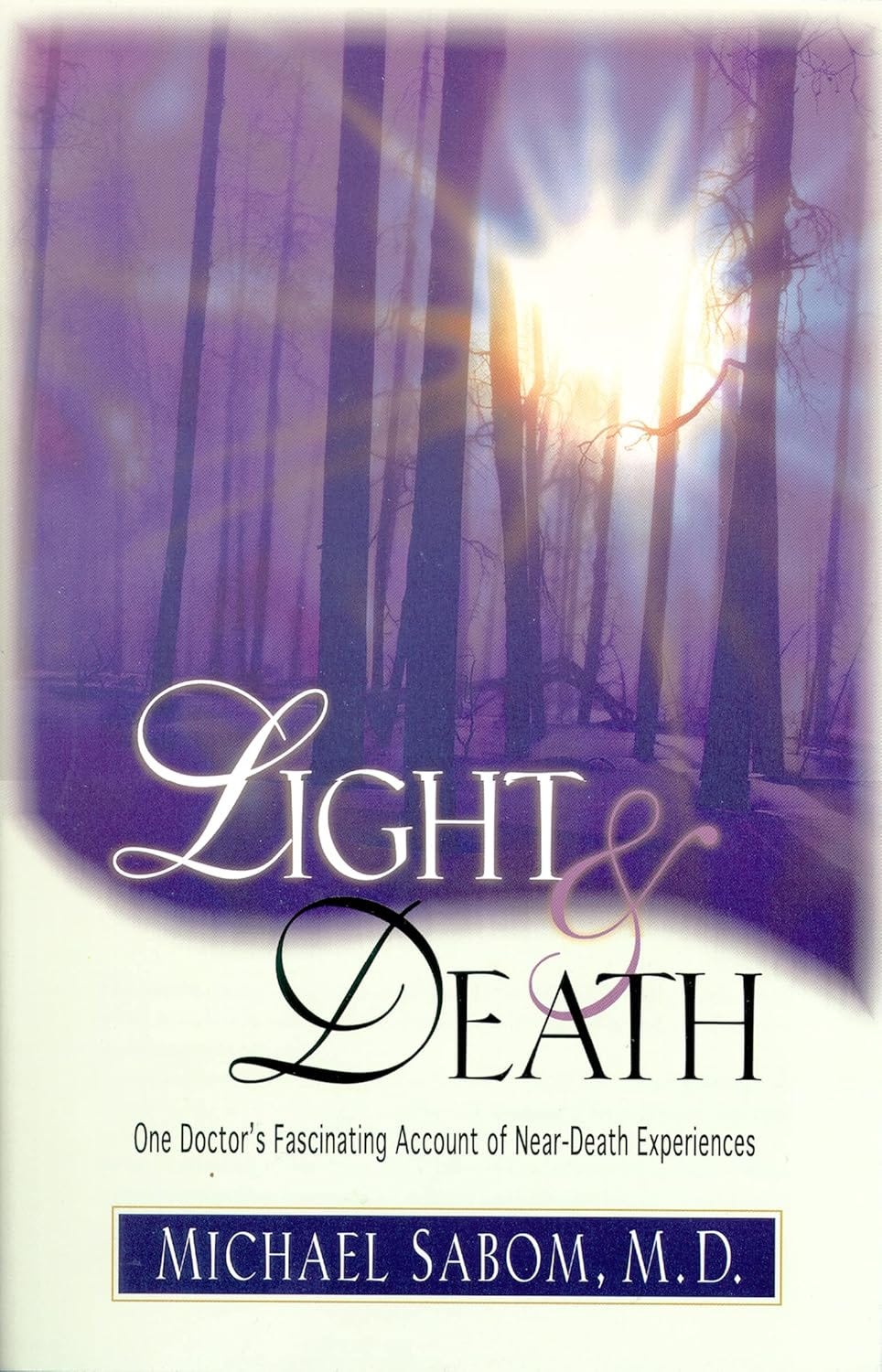
Critics, as well as those who argue that Reynolds’s NDE was genuinely paranormal, have been dissecting the case since Sabom published the account in his 1998 book Light and Death. As with the wing-flapping surgeon case, there’s a rather blurred anesthetic timeline. Those key parts about the distinctive bone saw and the cardiac surgeon’s comments about her tricky vasculature occurred while Reynolds was under general anesthesia and her aneurysm was still being assessed. This was hours before the hypothermic cardiac arrest, the draining of blood from her head, and the flattening of her brain waves. And by the time she heard those orderlies grooving to “Hotel California,” all that deadness was behind her: she was still unconscious, but a defibrillator had shocked her heart back into action, warm blood had been reinfused into her circulatory system, and her brain activity was back online.
As Ian and Greyson noted in the Journal of the American Medical Association (JAMA), “This kind of experience is not necessarily evidence of extrasensory perception; patients who are anesthetized or otherwise ostensibly unconscious sometimes can assimilate, and afterwards remember, conversations held in their presence.” That’s a little frightening and perhaps a word of warning for loose-lipped surgeons. But what’s important is that Reynolds’s auditory and brain stem response was still active at the time the neurosurgeon began cutting into her skull and when the female cardiac surgeon was speaking about her veins. The technician who inserted her earbuds countered that the tape and gauze covered the patient’s ear openings, making hearing all but impossible. Aside from his opinion, though, we can’t be entirely sure that this aural setup made for totally soundproof conditions that day. As for the bone saw, Reynolds got at least one detail wrong. Sabom noted this in his report:
Pam’s description of the bone saw having a “groove at the top where the saw appeared to go into the handle” was a bit puzzling. . . . [T]he end of the bone saw has an overhanging edge that [viewed sideways] looks somewhat like a groove. However, it was not located “where the saw appeared to go into the handle” but at the other end. Why had this apparent discrepancy arisen in Pam’s description? Of course, the first explanation is that she did not “see” the saw at all, but was describing it from her own best guess of what it would look and sound like.
Given that liminal field of numbed cognition, Reynolds may not have needed to guess what it sounded like at all. As she was still under general anesthesia, some subconscious part of her might have actually heard the saw and felt it reverberate in her bones. When you add that it was three years after her surgery that Sabom first interviewed Reynolds—time enough for her to learn more about the harrowing procedure and for some innocent buttoning up of gaps in the narrative—you can see why Ian and others who’ve bothered to look closely at even the best cases find the NDE evidence for survival “far from compelling.”
* * *
Not everyone who comes near death has a near-death experience. In fact, most don’t. We only know what patients are willing to share—and the fear of not being believed or being ridiculed is a real deterrent—but estimates suggest that only around 10 percent of those who survive a cardiac arrest report having left their bodies. That’s not an insignificant number, but it does beg the question of why it’s seemingly just currents out (and on again) for the remaining 90 percent. Once, after fainting at the doctor’s office, I felt as though I had traveled light-years and bathed in beautiful symphonies in a few lost seconds, which, I must say, felt encouraging for my own afterlife prospects. On the less encouraging side, in my more irresponsible years, I once went into a severe diabetic shock after some misadventures with alcohol and lay unconscious in a hotel room in Atlanta for thirty minutes. That half hour, by contrast to my OBE at the doctor’s office, felt like a split second: lights off, lights on. One moment I was dizzy, standing at the desk counting quarters to buy a can of sugary Coke from the vending machine, and the next thing I know, I’m flat on my back with two paramedics administering a glucose drip. (Luckily, my friend had come out of the shower and found me unresponsive.)
None of this is to say that Ian viewed NDEs as without potential parapsychological value. Some, such as the case of Pam Reynolds or a few Peak in Darien accounts, weren’t so easily dismissed as hallucinations. “It is not helpful to declare that all near-death experiences provide evidence of our survival after death,” he wrote, “but neither is it helpful to categorize them all as merely ‘toxic psychosis.’ I can feel dogmatic about only one conclusion in this controversy: that we still have a great deal to learn.”
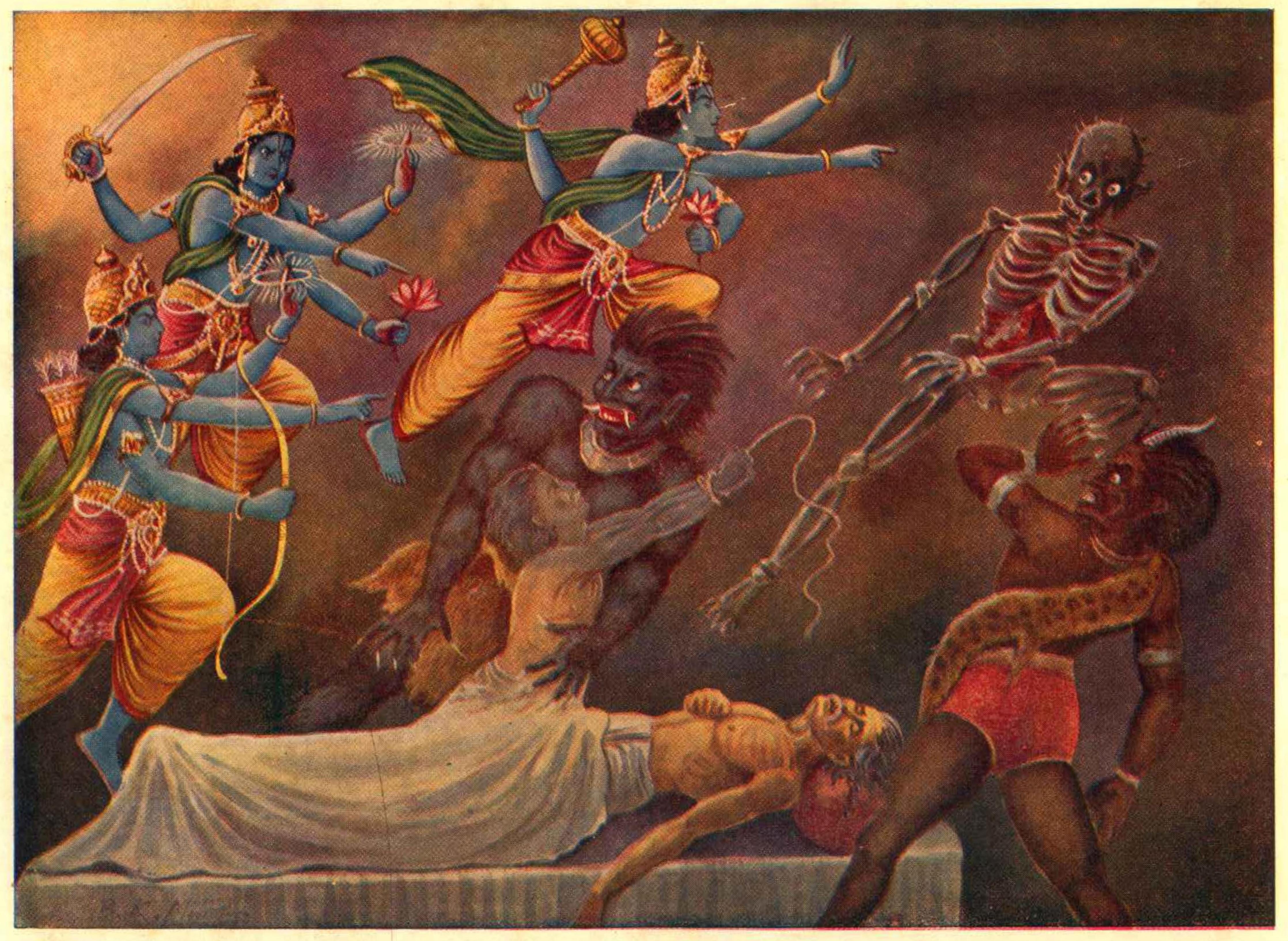
In the 1980s, he and Satwant Pasricha interviewed Indian subjects who claimed to have had NDEs. In doing so, they were among the first to study cross-cultural similarities—and differences—in reported experiences. The details for any given case were just as spectacular and intense as those in America, but there were some telling differences, too. The typical NDE case in India involved the subject being escorted by “messengers” to another realm. There they’d meet with an administrative official who, after consulting with books or papers, would discover a slight clerical mistake. The faux pas was usually some sort of identity mix-up; a person of the same name but a different caste, or someone living in a different but nearby village, was meant to have died, but the messengers got the wrong person. After the big whoops gets revealed, the subject is brought back by the messengers to the world of the living, whereby they’re “pushed down” into their body and revived.
This common NDE script among the Indian subjects, Ian and Pasricha realized, aligned with the religious and cultural beliefs of those they interviewed.
Yamraj, the king of the dead, is a well-known figure of Hindu mythology. So are his messengers, called Yamdoots, and “the man with the book,” Chitragupta. Chitragupta’s book is conceived as containing a record of a person’s deeds during the life just ended; judgments from the record determine the assignment of the deceased to heaven or hell until the time of his or her next incarnation. It can be safely assumed that all Indians are familiar with these beings, just as we can assume that nearly everyone in the West has some familiarity with Jesus Christ, the Virgin Mary, and at least a few of the prominent Christian saints, such as St. Francis of Assisi.

In other words, as with popular accounts of dying and getting a glimpse of heaven, God, Jesus, the Virgin Mary, angels, gates, clouds, tunnels, life reviews, reuniting with dead loved ones, being told it’s not your time yet, and other basic ingredients of a very American type of near-death experience, there appears to be a distinctively Indian version of NDEs as well. The parapsychologists, however, admonished skeptics not to read too much into this finding. These kinds of differences, they wrote,
may lead [materialists] . . . as confirming the view that the contents of NDEs are nothing but expressions of culture-bound beliefs. We should remember, however, that if we survive death and live in an after-death realm, we should expect to find variations in that world, just as we find them in the different parts of the familiar world of the living. A traveler to Delhi encounters dark-skinned immigration officials, who in many respects behave differently from the lighter-skinned immigration officials another traveler may meet when arriving in London or New York.
* * *
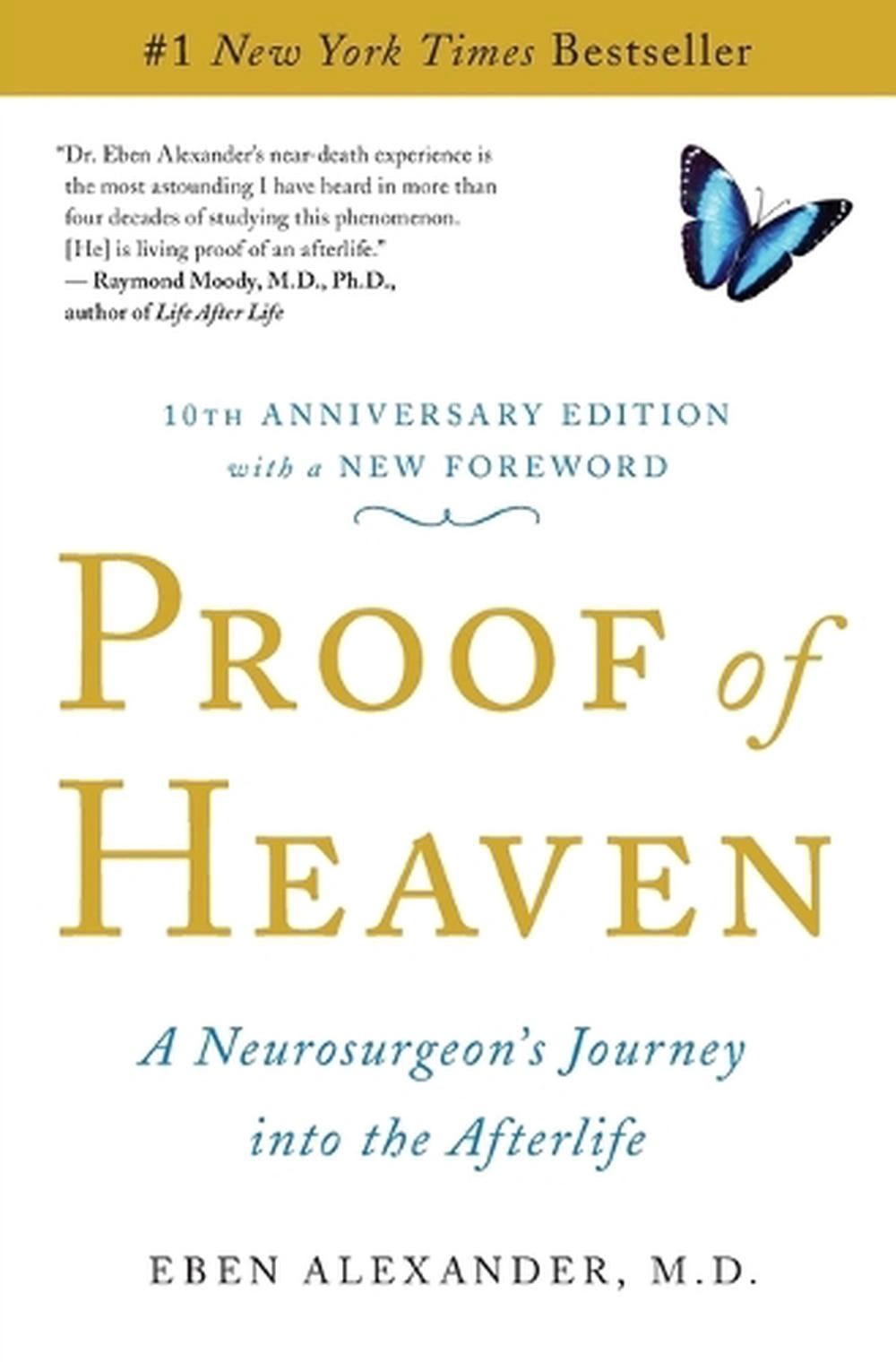
Ian and Pasricha only meant it as an analogy, but their reference to ethnic variation in melanin content, when applied to presumably discarnate personalities in the afterlife, raises another knotty question: What is it like to be “in the body” of someone who claims to have “left the body”? For those who’ve had an OBE or NDE, the experience is usually recounted as though the person has retained basic proprioceptive states in sync with a bog-standard human morphology. No matter how otherworldly the scene, the person having an NDE perceives things from the vantage point of a bipedal primate with a body plan fashioned over eons of evolutionary time. In Eben Alexander’s book Proof of Heaven: A Neurosurgeon’s Journey into the Afterlife, the author described flying on the back of a giant butterfly alongside a beautiful woman with “high cheekbones” and “deep blue eyes” during his own shockingly vivid NDE. Presumably, he was seated in an upright jockey position.
Ian examined this phenomenology of NDEs, or the what-it-feels-like sense of being embodied as a disembodied spirit, in an early study with Bruce Greyson published in the American Journal of Psychiatry. Looking at seventy-eight cases of NDEs, they found that the “nonphysical body” was commonly described as being much lighter in weight than the physical body (74 percent) but usually the same size (68 percent) and the same age (84 percent). A considerable percentage of respondents (67 percent) described having some vital signs in their nonphysical body (breathing, a heartbeat, or even a pulse). And like that mountaineer saying he felt as though he were “a ball of air in the air” while attached to his corpse by a string, some (28 percent) said they’d felt “linked” somehow to their physical body. Another subset (28 percent) recalled that defects of their physical bodies (e.g., partial deafness, missing limbs) were absent in their nonphysical bodies. Many (71 percent) had unusual somatic experiences during the NDE, including a feeling of warmth. Unusual auditory phenomena, such as hearing music or voices, was also quite common (57 percent). A handful reported unusual smells (25 percent) and tastes (10 percent).
Self-reports, of course, reflect people’s subjective impressions only. There have been several empirical attempts to determine whether people’s souls actually leave their physical bodies during an NDE. In one ambitious, large-scale study led by critical care specialist (and part-time parapsychologist) Sam Parnia, hospitals across the United States, the UK, and Australia agreed to install shelves below the ceilings of rooms where people were likely to have cardiac arrests requiring CPR, including emergency departments, operating rooms, and acute medical wards. Each shelf contained a unique image only visible from above the shelf—a mix of animals, people, nationalistic and religious symbols, and major newspaper headlines. All told, there were nearly a thousand shelves installed across countries, so plenty of opportunity to test the veridical out-of-body hypothesis. “It was postulated,” explained Parnia and his coauthors in a 2014 write-up in the journal Resuscitation, “that should a large proportion of patients describe [visual awareness] combined with the perception of being able to observe events from a vantage point above, the shelves could be used to potentially test the validity of such claims (as the images were only visible if looking down from the ceiling).”
During a study period of four years, over two thousand “cardiac arrest events” occurred in these areas with shelves. Most of those patients didn’t have a near-death experience. They had a total death experience, and so they couldn’t report back. Among the survivors, 140 participated in follow-up interviews. Although 9 percent reported an NDE, including several who claimed to see their own bodies from above, whatever images were on the top of those shelves remain known only to Parnia and his fellow incarnate researchers.
Learn more about Ian Stevenson’s storied career and parapsychological investigations into reincarnation, apparitions, mediumship, poltergeists, and more in my new book The Incredible Afterlives of Dr. Stevenson, available now.

Wow! As a hospice chaplain/medium/rabbi I love reading about NDEs and I've read Dr. Stevenson's and other's as well! So looking forward to your book and thank you for doing this excellent work!
Jesse, you seem to be committing to an Ad Hoc hypothesis. Anyone can easily create alternative scenarios with out any evidence of the case (e.g., the preoperative flapping) without bothering on verifying whether such hypothesis is feasible (i.e., without directly inquiring into the case or the witnesses) or contrasting with the existing data (e.g., how the surgical team could not explain the details about the flapping along with other surgical details the patient had not a way to learn about).
Let me briefly try one: It is possible that, after the surgery, and while attending other patients in the recovery room, Dr. Takata felt into the habit of pointing at things with his elbows as he usually did during surgery, which is how the patient actually learned about the habit. These, along with the explanation patients themselves receive before their surgery, can easily account for the patient's narrative.
The sin of the Ad Hoc hypothesis is not only that it avoids the falsification of a theory. Its real sin is that the Ad Hoc hypothesis is unfalsifiable because we do not bother on proving it is right or wrong (and sometimes feasible, as in this case). It seems to suffice as a good enough hypothesis if it can explain away the opposite idea of what we like with what we know about the case (always avoiding learning more details that might contradict it).
I am leaving below Dr. Takata's declarations about the case for the benefit of your readers:
"I have often heard from other doctors a case in which the anesthetic wears off during the operation and the patient hears the doctors’ conversation and I myself have had such patients. But I have never encountered one in which the patient describes such details of the operation as if he/she saw the process. Frankly, I don’t know how this case can be accounted for. But since this really happened, I have to accept it as a fact. I think we should always be humble to accept the fact."