


Years ago, shortly after I moved to New Zealand, I offered to look after a neighbor’s cat over a long holiday weekend. “I’ll leave the key in the litter box,” they told me. It took me a minute before I realized they’d said letterbox. (I’m sure you’ve heard that old joke about Kiwis cleaning their huge decks.) Anyway, I didn’t want to be rude by questioning any sacred key-concealing customs here on the South Island, and so, as much as I love cats, in that awkward moment I considered bowing out—or at least asking for gloves.
After all, it just so happened that I’d recently learned that up to a third of the global human population may be infected with the brain parasite Toxoplasma gondii. And considering that a direct route of transmission is incidental contact with cat feces, sifting through spoiled litter for a house key seemed unwise. I mean, I had no idea what sort of lifestyle that cat was living.
Toxoplasmosis is known to affect over a hundred vertebrate species, from woodchucks to wombats, dingoes to dolphins, hippos to humans. But the parasite’s definitive host—the only animal in which it can sexually reproduce, and therefore the one it’s exquisitely designed to get inside—is the feline, wild or domestic. It all starts with “fecal-oral transmission,” as it’s known in the business. The most straightforward circle of life for the parasite is this: an infected cat poops out oocysts (parasite eggs), a secondary host consumes those oocysts (for example, a rodent eats said poop, or the oocysts get into the soil or water), the parasite reproduces asexually in this host leaving latent cysts in its organs (including the brain), and a cat preys upon and eats that infected animal. Humans can become tertiary hosts by, say, eating undercooked meat, drinking contaminated water, or failing to take precautions when cleaning a litter box.
If you do get the parasite, it can lie dormant for decades, but it never goes away. Fortunately, most infected people are seemingly asymptomatic. Scientists can’t say that it causes any health issues, because you can’t (ethically) do controlled experiments in which Patient A is deliberately given the parasite and Patient B is not, to see who is more likely to develop, say, schizophrenia or heart disease. Nevertheless, in terms of increased risk, there are correlations with a sweeping array of physical and mental health problems. It’s especially dangerous for those who are already immunocompromised and for pregnant women, as there’s a clear link with birth defects. But since most of us will never be tested, carriers are often none the wiser.
Still, having one’s cranium colonized by a parasite sounds like the stuff of nightmares. And what have parasites evolved to do? Well, that’s where it gets even more unsettling. Parasites manipulate the behaviors, physiology, and appearance of their intermediate hosts in ways that facilitate their transmission, and thus their ultimate return to their definitive hosts—all hail the cat king, in this case. From an evolutionary perspective, such body-snatching adaptations are often quite brilliant and involved. For example, the horsehair worm parasite effectively highjacks the central nervous system of an infected wood cricket and steers its hapless host to the nearest body of water. Wood crickets can’t swim, so normally they avoid water, but in this zombified state they hop right in and drown. The parasitic worms then slither out of their dead cricket heads, cavorting and reproducing in the water, where the larvae are devoured by mosquitoes or mayflies hunting the water’s edge. Those flying insects eventually leave shore and in turn get snatched up by a hapless wood cricket, and… rinse and repeat.
For T. gondii, the trick is to drive the infected animal to its definitive feline host. In the laboratory, mice that are infected with T. gondii spend more time in wide open spaces, rendering them vulnerable to predation, and infected rats even become attracted to the smell of cats (as in, sexually aroused). It’s not just that infected rodents get dumber altogether; they’re otherwise cognitively unimpaired. There’s evidence of this “fatal feline attraction” closer to the phylogenetic bone as well. In one study, chimpanzees in Gabon infected with T. gondii showed a “morbid attraction to leopard urine” but not to that of lions and tigers. Interestingly, only leopards are natural felid predators of chimpanzees. In another study, human males with T. gondii rated the smell of cat urine as “more pleasant” than did uninfected men, but the groups didn’t differ in their ratings of giraffe, horse, or tiger urine.
If that isn’t weird enough, while many people are asymptomatic, personality may nevertheless be affected by T. gondii, with infected people being higher on everything from neuroticism to suicidality to entrepreneurial activities—that last one seemingly a function of increased risk-taking. They also score lower on conscientiousness and generosity. A greater likelihood of getting into a traffic accident is one of the most robust findings, with higher parasite seroprevalence being associated with crashes. Autopsy records show that T. gondii-infected people are more likely to die from risky driving acts, such as not wearing a seatbelt, dangerous lane passing, or riding a motorcycle without a helmet.
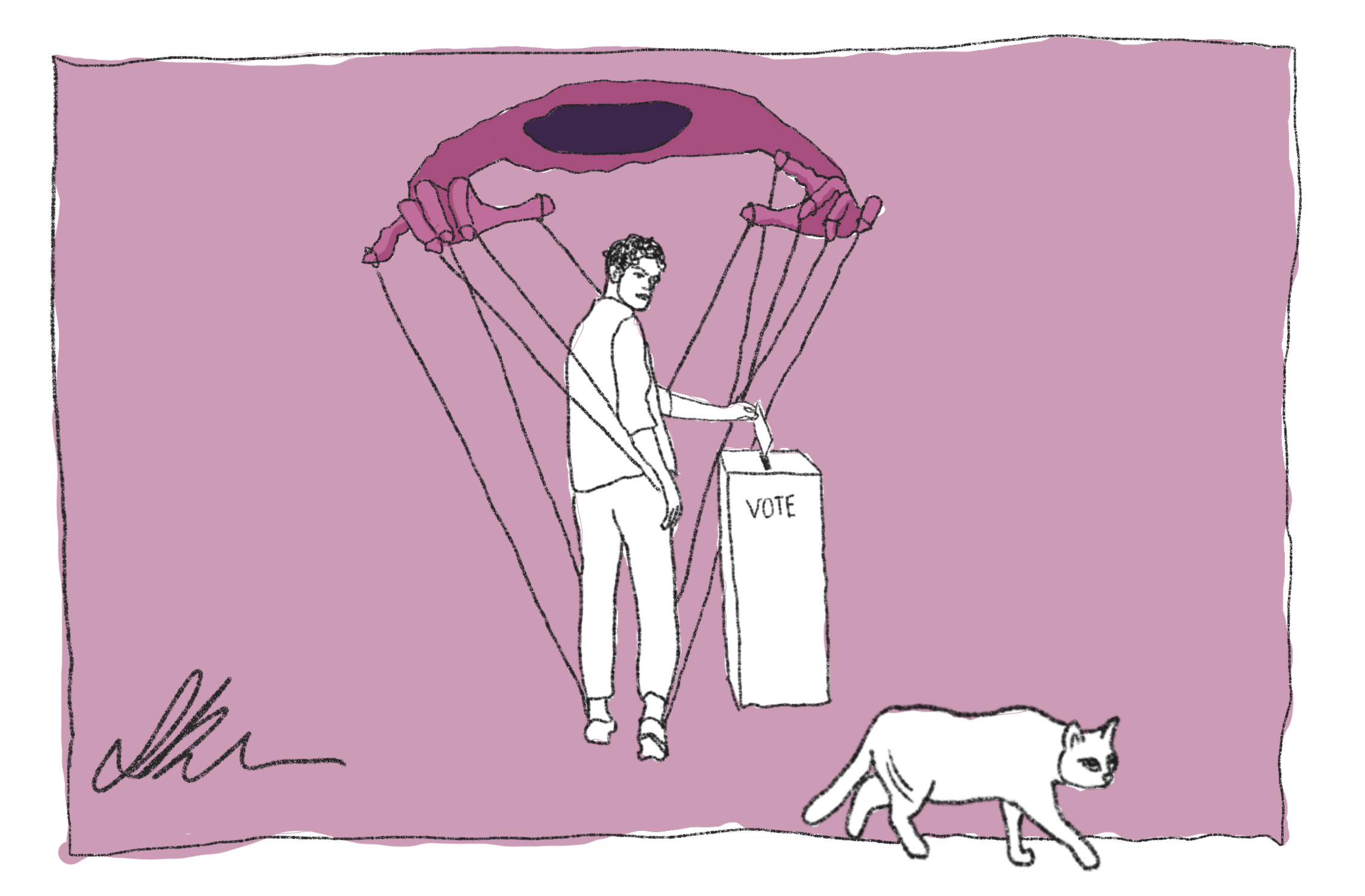
None of this implies that T. gondii is playing the strings of its human host’s bad decision-making, just to, I don’t know, increase the odds that our carcasses will be scavenged by a more efficient intermediate host, or maybe even a hungry feral cat (there’s an evolutionary just-so story for you). Personality and related behavioral effects may instead be side effects of a more general brain inflammation, or possibly due to hormonal or metabolic changes and neurotransmitter errors stemming from the infection. But researchers in this area also urge us not to rule out the calibrated puppetry of the parasite. “Of interest is whether such induced behavioral aberrations are evolutionarily adaptive for the parasite,” clarified Stefanie Johnson and Pieter Johnson a few years ago in Annual Review of Animal Sciences, “that is to say, whether they enhance the likelihood that T. gondii is subsequently transmitted to a suitable felid host . . . the notion that a cryptic but widespread parasite might alter patterns of [human] risk tolerance, neuroticism, mental illness, suicides, or accident proneness has elicited tremendous research interest and intrigue.” As gnawed fossils indicate, our hominid ancestors were indeed the prey of wild cats. I haven’t seen it put quite this way, but maybe today’s T. gondii effects in our species are another candidate for the evolutionary mismatch problem. Basically, what worked for an organism in its ancestral environment doesn’t fit the present conditions. “If entering the brain sometimes but not always causes changes in behavior that favor transmission,” reason Johnson and Johnson, “the likelihood of T. gondii infecting the brain could be selected for even if some of the changes do not favor or disfavor transmission.”
To what extent really is latent toxoplasmosis a problem, though? Well, the parasite may be more insidious than we realize, according to recent findings from the lab of Jaroslav Flegr, an evolutionary biologist from Charles University in the Czech Republic. In a 2022 study published in Evolutionary Psychology, Flegr and his colleagues compared the political beliefs and values of people infected with the parasite to those who were not. That their results didn’t attract more attention at the time is a little surprising to me, because these scientists literally found that having a brain parasite predicted people’s political leanings. These days, we often hear about so-called infectious ideas (e.g., see “woke mind virus”), but those are just slick disease metaphors for sticky beliefs. T. gondii is an actual, real live brain parasite, an endogenous biological organism that inveigles itself into human brain tissue. There are an estimated 40 million affected heads in the US alone.
Flegr and his team administered the Political Beliefs and Values Inventory to a few thousand T. gondii-infected and uninfected Czechs, all lab-confirmed. It’s a 34-item survey measuring four dimensions. These include tribalism (e.g., “My government should value the lives of its citizens more than the lives of foreigners,” “Minorities of different nationalities are a threat for our culture,” etc.); cultural liberalism (e.g., “It is acceptable for a same-sex couple to live together,” “People should have the right to end their life with the help of a physician if they ask for it,” etc.); anti-authoritarianism (e.g., “The state shouldn’t have the right to censor the internet,” “Adults with clean criminal records should have a right to own a firearm,” etc.); and economic equity (e.g., “The gap between low and high incomes should be reduced,” “A society poor but equal is better than a rich society that is stratified in income and wealth”).
Overall, there were significant differences on three of four of these measures based on parasitic status, with T. gondii-positive participants scoring higher on tribalism, and lower on anti-authoritarianism and cultural liberalism, than those without the parasite. There were also some sex differences in line with the existing literature on the opposite effects of toxoplasmosis in men and women (e.g., infected men are more likely to disregard the rules of society, whereas infected women show the opposite pattern). But the most substantive point here is that infection status indeed mattered when it came to the participants’ political ideologies. And those effects panned out even after controlling for physical and mental health. In other words, parasite infection status alone predicted one’s sociopolitical views.
These findings don’t neatly fit the prevailing “behavioral immunity” evolutionary model known as the parasite-stress theory, which holds that a nation’s general sociopolitical profile is related to its ambient threat level of communicable diseases. We know that countries dealing with a greater burden of infectious pathogens display more conservative political attitudes and xenophobia than those with lower pathogen prevalence, an adaptive strategy minimizing contact with outsiders who may be carrying new pathogens (intergroup effect) as well as maximizing the preservation of cultural practices helping to keep pathogens at bay (intragroup effect). With Flegr et al.’s study, however, the results revealed parasite-related sociopolitical differences within the same low-pathogen society, the first such study of its kind. Also, unlike the types of contagious pathogens linked to the parasite-stress theory (e.g., Covid), T. gondii is almost always a zoonotic disease—we get it from other species, not other humans. (Sexual transmission can occur, but it’s not the driving mechanism of propagation.)
The authors instead offer a more controversial explanation, which is that T. gondii leads to subtle, brain-based personality alterations in its hosts, and these changes are reflected in the political views of infected citizens. “The direct effect of a long-term mild stress caused by an inflammatory reaction to the presence of a parasite may be at play,” they conclude, “shifting hosts’ personalities and thus also their political attitudes.”
There’s no manipulative parasite in this scenario purposefully tinkering with people’s heads, making them think and act in ways that increase the chances of them ending up in a feline’s intestines. Such changes can be better understood, the authors contend, as a byproduct of neuroinflammation or other physical stress brought about by coping with the infection. Still, given what may be working its way unnoticed into voting booths around the world, they poke at the broader implications. (And the title of their study is pretty cheeky, see below.) “This… might provide important insight into the changing political climate in certain countries.”
And to think, it all starts with cat poop.
Kopecky, R., Příplatová, L., Boschetti, S., Talmont-Kaminski, K., & Flegr, J. (2022). Le petit Machiavellian prince: Effects of latent toxoplasmosis on political beliefs and values. Evolutionary Psychology, 20(3), 14747049221112657.
Questions? Concerns? Ideas? Email the corresponding author directly: Jaroslav Flegr flegr@cesnet.cz.
Postscript: I love cats. Read this brief but informative article to see why responsible cat ownership poses a relatively low risk of transmission to humans. Outdoor cats and those fed raw food are more vulnerable. Even if your cat does get infected, your own risk is still low.
Like what you read? Toss a tip in the jar—any amount that makes sense for you—so I can keep overthinking things on your behalf.